




Is Vinyl Ester Resin Right for Chemical Storage Tanks?
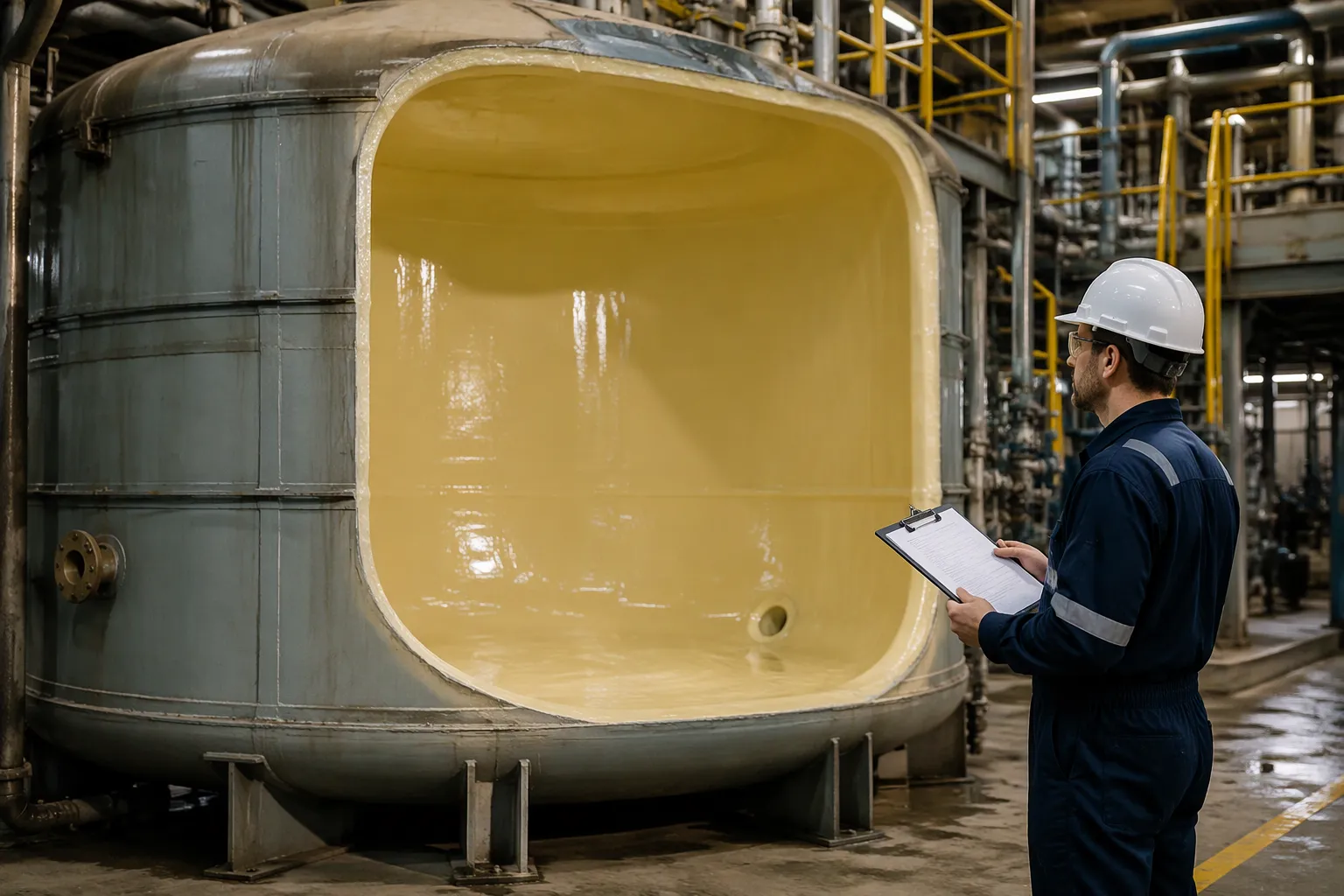
Vinyl ester resin often works well for chemical storage tanks. But whether it fits still depends on the chemicals stored, the operating temperature, and the rules that apply. A tank that holds strong acid at room temperature may need a different matrix than one holding hypochlorite at high heat.
This article compares vinyl ester with epoxy, polyester, and thermoplastics. Each family fits a different job. The goal is not one best material. The goal is a material that matches the service conditions. Readers can use the criteria covered here to narrow the choice and confirm a resin grade with a technical specialist.
Key Takeaways
Vinyl ester resin stands up to many chemicals and high heat, so it is a strong choice for tough storage jobs.
Post-curing is needed to bring out the resin's full chemical resistance and strength.
Pick the right resin grade for your chemicals, temperature, and how long it needs to last. That gives you the best results.
Vinyl ester often gives you a better mix of low cost and long life than polyester or specialty plastics.
Don't use vinyl ester if temperatures go above its limit, or if certain solvents need a thermoplastic liner.
What Is Vinyl Ester Resin?
Chemistry and Structure
Vinyl ester resin is a thermosetting resin. It combines an epoxy backbone with ester linkages. The most common type for chemical service is bisphenol A epoxy vinyl ester. Manufacturers use this resin to build fiber-reinforced plastic tanks, pipes, and liners.
The molecular structure drives long-term performance. The epoxy backbone protects the ester bonds from hydrolysis. Hydrolysis is the chemical breakdown that weakens a resin over time. A resin with fewer exposed ester groups resists attack from water, acids, and alkalis. This structure gives vinyl ester its edge in wet and corrosive service. The backbone also provides more reactive sites for cross-linking. A denser cross-linked network slows chemical penetration into the tank wall.
Vinyl Ester Resin vs. Polyester and Epoxy
Unsaturated polyester costs less and handles mild service well. It suits general-purpose tanks, low-concentration chemicals, and budget-sensitive projects. Its resistance to strong acids and hot caustics is lower than vinyl ester's. Polyester remains a practical choice when the chemical load is light.
Standard epoxy offers strong adhesion and excellent structural bonding. It works well for structural repairs, bonding applications, and some chemical exposures. Its resistance to oxidizing chemicals such as nitric acid, hydrogen peroxide, and hypochlorite is weaker than vinyl ester's. Vinyl ester fits best where oxidizing media, strong alkalis, or elevated temperatures dominate. Epoxy fits best where adhesion and structural strength matter most. Each material serves a distinct role, and the service environment decides which one performs.
Key Performance Factors
Chemical and Temperature Resistance
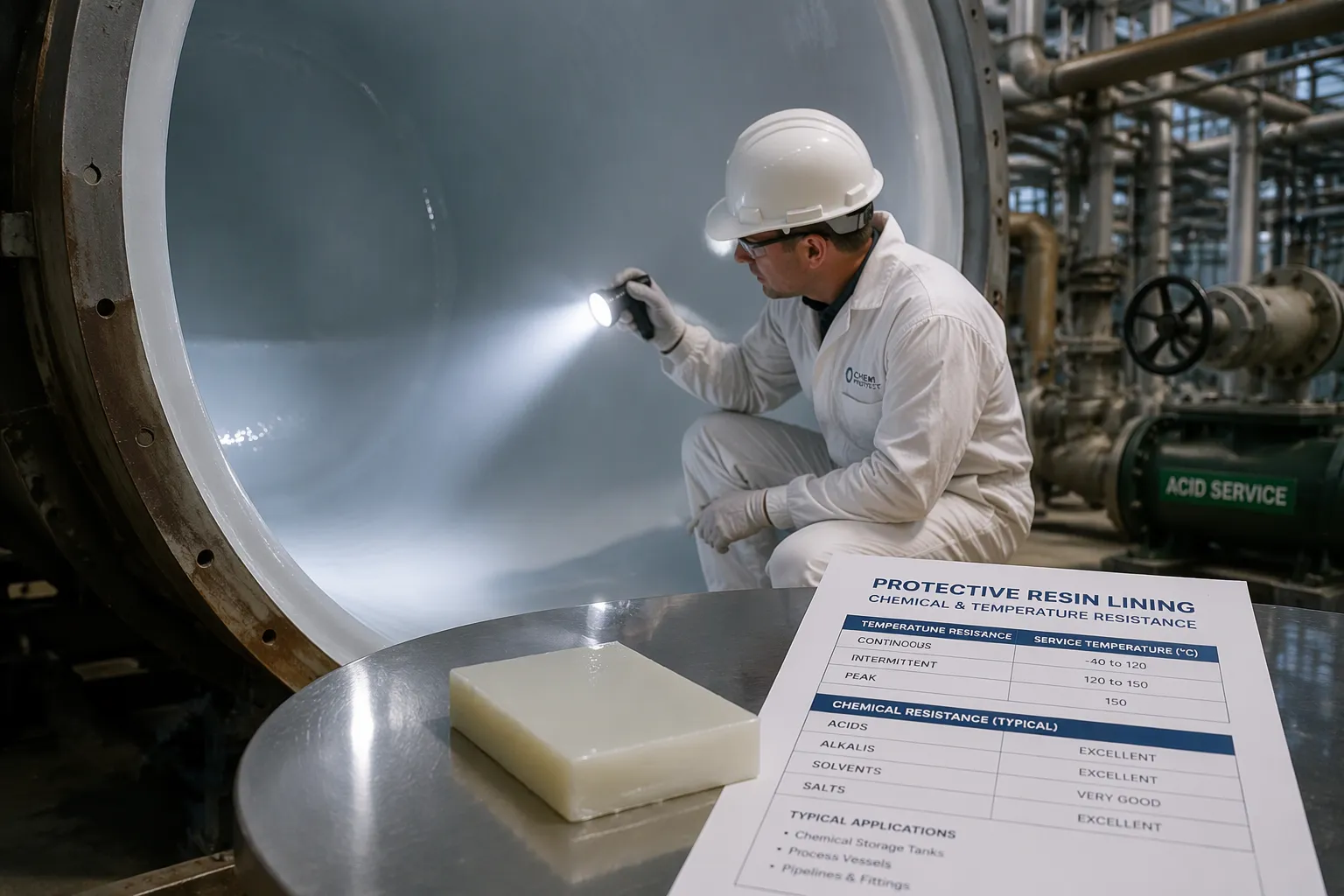
Vinyl ester resin stands up to many harsh chemicals. Strong acids, alkalis, hypochlorites, solvents, and salty environments are all within its range. The resin also handles hydrogen sulfide and contact with fuel or ethanol blends. These conditions show up often in chemical plants, wastewater treatment, and fuel storage. Solvent resistance depends on the type of solvent, so the technical data sheet should confirm the exact exposure. Concentration and exposure time still shape the final recommendation. A weak acid at room temperature is a different challenge than the same acid at full strength and high heat. Fabricators should match the grade to the actual medium, not to a general category.
Oxidizing chemicals need special attention. Standard epoxy has strong adhesion, but it does not hold up as well against nitric acid, hydrogen peroxide, and hypochlorite. Vinyl ester keeps its resistance in these oxidizing services. This advantage helps tanks that handle mixed chemical streams. That difference matters for tanks that get regular cleaning or disinfectant dosing. A liner that breaks down under hypochlorite will blister and expose the structural laminate beneath.
Temperature sets the second limit. POLYMER's Epoxy & Vinyl Ester Resin has a Heat Deflection Temperature above 105°C. This rating supports hot process streams and high service conditions. The HDT marks the point where the resin softens under load, so service temperature should stay below it with a margin. The resin reaches its full potential only after post-cure. A typical schedule runs 2 hours at 80°C, then 2 hours at 100°C. Post-cure drives cross-linking density to its maximum. Maximum cross-linking density, in turn, delivers maximum chemical resistance. A tank that skips post-cure may pass an initial inspection and still fail early in service. Fabricators should treat the post-cure step as part of the specification, not as an optional finish.
Mechanical Strength and Durability
Tank shells and liners face mechanical loads as well as chemical attack. Vinyl ester cures with low shrinkage. Low shrinkage protects dimensional accuracy and reduces internal stress. Less stress means fewer micro-cracks at flanges, nozzles, and seams. These joints concentrate stress, and a crack there can open a leak path. A shell that shrinks unevenly can distort at nozzle openings and make gasket fit harder.
Crack resistance and toughness support long service in buried and pressurized tanks. Buried tanks carry soil loads and groundwater pressure. Pressurized vessels cycle through stress again and again. A tough resin absorbs impact and flexes without breaking. Impact resistance also matters during transport and installation, when tanks and pipe sections take hits before they enter service. High impermeability blocks chemical permeation through the wall. This property protects the structural laminate behind the liner. Permeation is a slow process, and a barrier that resists it extends the life of the whole structure.
These mechanical traits work together with the chemical traits. A crack-free, impermeable wall keeps the aggressive medium away from the reinforcement. The result is a tank that holds its strength over decades of service. Multi-layer compatibility lets the same resin serve the anti-corrosion liner and the outer structural layer. That shared chemistry simplifies inventory and strengthens the bond between layers. Fabricators can also repair a damaged liner with the same resin family.
Where Vinyl Ester Fits Best
Suitable Chemicals and Conditions
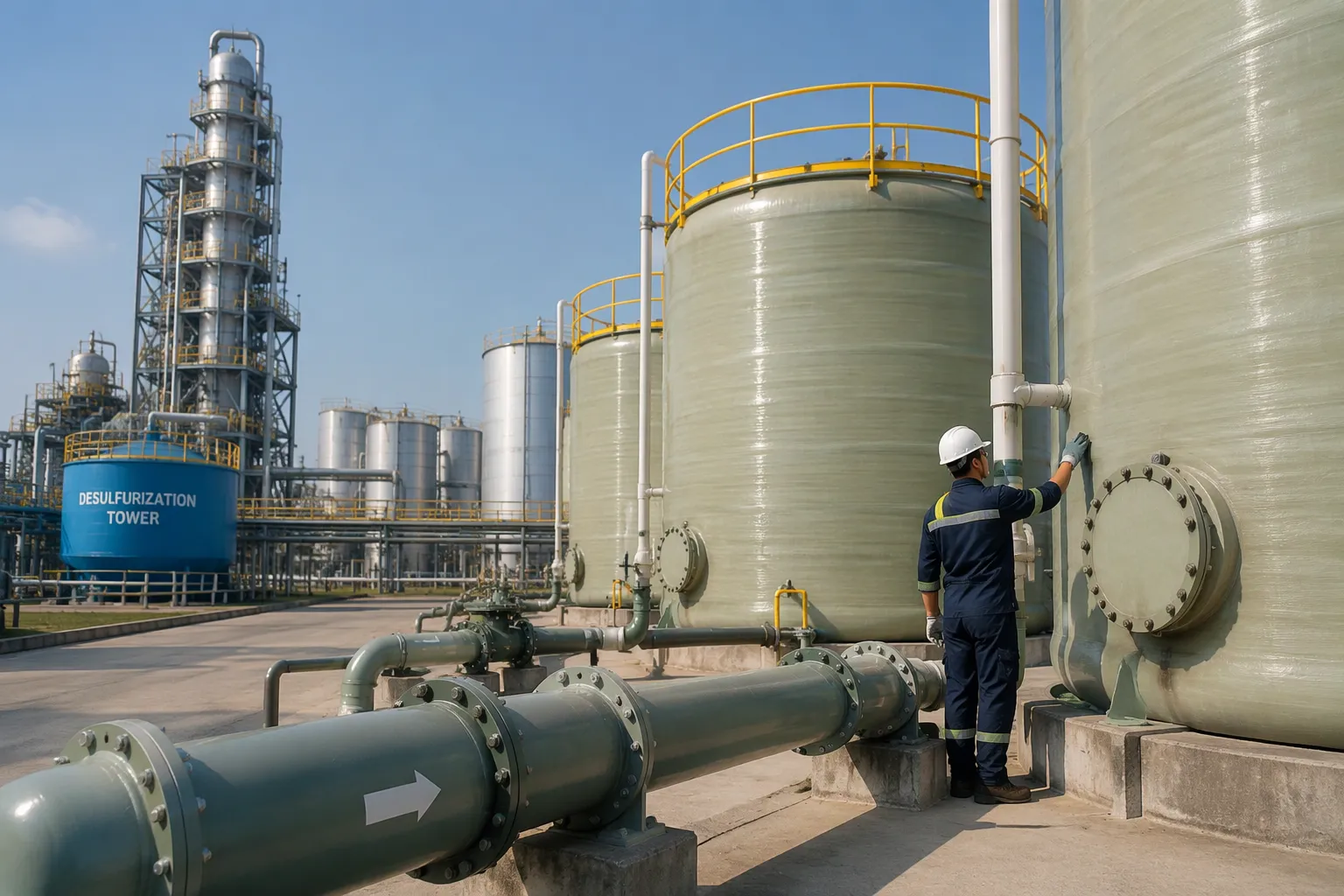
Vinyl ester resin is used in many kinds of equipment that hold chemicals and fight corrosion. Chemical storage tanks are the most common use. FRP liners keep harsh chemicals from damaging concrete and steel vessels. Desulfurization towers use the resin to stand up to acidic flue gas condensate. Electrolytic cells in metallurgy face very harsh caustic exposure. Corrosion-resistant pipes carry acids and slurries across plant sites. Wastewater vessels handle sewage, sulfides, and cleaning chemicals. Seawater desalination plants use the resin to resist salt and chloride attack. Fuel tanks store gasoline and ethanol blends without swelling or getting soft.
Picking the right grade matters as much as picking the resin family. POLYMER's PLM-197 grade, a bisphenol A epoxy vinyl ester, is made for metallurgical plants that face extreme caustic environments. Other grades cover food contact, flame spread, and outdoor weather exposure. A fabricator should check the grade against the actual medium before production starts.
Service conditions decide the final match. Five variables drive the choice: chemical medium, concentration, temperature, pressure, and required service life. A tank holding dilute acid at room temperature needs a different grade than one holding the same acid at full strength and high heat. Pressure adds mechanical demand on top of chemical demand. Service life sets the safety margin. A ten-year target allows a thinner liner than a thirty-year target. Fabricators should write down all five variables and share them with the resin supplier. A general chemical category is not enough. The data sheet review should cover the exact medium and the worst-case upset condition.
Standards and Compliance
FRP tanks and linings fall under several industry standards and certification programs. These cover design, fabrication, testing, and material qualification. Buyers should make sure the resin supplier supports the standard that governs their project. Common frameworks address filament-wound tank construction, hand lay-up quality, and liner inspection. Food-contact service adds its own requirements for resin formulation and extractables. Flame-retardant service adds fire performance testing. Weather-resistant grades support outdoor installations without surface chalking or gloss loss.
POLYMER's Epoxy & Vinyl Ester Resin line offers food-grade, flame-retardant, and weather-resistant options. Each grade comes with documentation to support the relevant compliance review. Buyers should ask for the technical data sheet and certification package before approving a resin for tank service. The compliance review should also confirm that the selected grade matches the fabrication method. A grade made for filament winding may not suit hand lay-up, and the reverse is also true.
Material selection should match the full service envelope. Chemical medium, concentration, temperature, pressure, and service life all shape the recommendation. A resin that meets a standard still needs a grade check against the actual tank duty. Vinyl Ester Resin performs best when the specification reflects real operating conditions, not a generic category.
Cost and Lifecycle Comparison
Upfront Costs vs. Alternatives
Vinyl ester resin usually costs more than unsaturated polyester. It costs less than high-performance thermoplastics or specialty epoxy systems. Three things drive the price. Resin chemistry sets the base cost, because the epoxy backbone takes more processing steps than a standard polyester chain. Grade selection adds cost too. Food-grade, flame-retardant, and weather-resistant formulas need extra qualification work. The way the tank is built also shapes the final price. Filament winding runs fast on automated lines, while hand lay-up takes more labor hours per square meter of laminate.
Buyers should compare quotes on the same basis. A low resin price per kilogram means little if the laminate needs extra layers to reach the target service life. Polyester wins on budget for mild service and short-life projects. Thermoplastics win in certain chemical or temperature niches where no thermoset holds up. Vinyl ester sits in the middle, and that spot often gives the best balance for tough chemical duty.
Service Life and Maintenance
A properly built vinyl ester tank can last for decades. The resin resists hydrolysis and permeation, so the wall keeps its strength over long exposure. That durability cuts maintenance and downtime. Plant operators avoid frequent inspections, patch work, and early replacement. Many tanks can also be relined instead of replaced, which extends the asset at a fraction of the cost of a new vessel. Total cost of ownership often favors vinyl ester for this reason, even when the first quote runs higher than polyester.
Protecting that investment takes discipline. Post-cure at the specified schedule builds full cross-linking density. The correct curing system matters just as much. Vinyl Ester Resin needs specific cobalt naphthenate promoters and sometimes added DMA. Standard polyester promoters will not give a reliable cure. POLYMER supplies the complete matching curing system, so fabricators can lock in the performance they paid for.
When Vinyl Ester May Not Be Right
Limitations to Consider
Vinyl ester resin has clear limits. If service temperatures go above the Heat Deflection Temperature, the resin is pushed past its design range. At that point, the material softens under load, and a tank wall loses stiffness. A process stream that runs hotter than the HDT needs a different material or a thermal barrier.
Some chemicals call for a thermoplastic liner. Certain solvents and aggressive media attack thermoset matrices over time, and no vinyl ester grade solves that problem. A fabricator should confirm the exact medium against the data sheet before committing to a thermoset.
Shelf life also constrains planning. Vinyl Ester Resin typically keeps for 3 to 6 months. It must sit in a dark, cool place below 25°C and away from UV light. High reactivity shortens storage life compared with standard polyester. Buyers should order against a production schedule, not against a warehouse target.
Post-cure is not optional. The resin needs a controlled schedule, such as 2 hours at 80°C followed by 2 hours at 100°C, to reach full cross-linking density. A shop without oven capacity or a reliable cure plan will not get the rated performance.
Alternative Materials and Best Uses
Polyester fits mild service and tight budgets. General-purpose tanks, low-concentration chemicals, and short-life projects run well on it. Standard epoxy fits adhesion-critical work and structural bonding, where grip and strength matter more than oxidizing chemical resistance. Thermoplastics such as HDPE, PP, and PVDF fit extreme chemical or temperature niches where a thermoset matrix cannot hold.
Each option has a best-fit scenario. The goal is matching material to service conditions, not ranking the families. POLYMER supplies polyester, epoxy, vinyl ester, and auxiliary systems, so the technical team can recommend the right matrix for a given tank duty. A buyer who shares the medium, concentration, temperature, pressure, and service life gets a recommendation grounded in the full picture.
The resin gets a fair review. It is a solid all-purpose pick for many chemical storage uses. Acids, alkalis, hypochlorites, and high temperatures are all within its range. It works for tanks that hold mixed chemical streams and need a long service life. The material still needs a fit check against the real job.
Five criteria guide that check. Buyers should confirm chemical compatibility, temperature range, mechanical demands, regulatory standards, and total lifecycle cost. Each one narrows the grade choice. A polymer specialist, like POLYMER's technical team, can confirm the right Vinyl Ester Resin grade for their specific tank service.
FAQ
Why does vinyl ester resin need a post-cure step?
Post-cure pushes cross-linking density to its highest level. POLYMER's Epoxy & Vinyl Ester Resin only reaches full chemical resistance and its rated Heat Deflection Temperature above 105°C after a controlled schedule. A typical cycle runs 2 hours at 80°C, then 2 hours at 100°C. Skipping this step can make a tank's service life shorter.
Can fabricators use standard polyester promoters with vinyl ester resin?
No. Vinyl ester resin needs specific cobalt naphthenate promoters, and some formulations also require added DMA (dimethylaniline). Standard polyester promoters will not give a reliable cure. POLYMER supplies the complete matching curing system so fabricators get steady results.
How should a shop store vinyl ester resin before use?
Vinyl ester resin usually keeps for 3 to 6 months. It must sit in a dark, cool place below 25°C and away from UV light. High reactivity makes storage life shorter than standard polyester. Buyers should order against a production schedule instead of building warehouse stock.
Which grade suits extreme caustic service?
POLYMER's PLM-197 grade, a bisphenol A epoxy vinyl ester, is made for metallurgical plants that face extreme caustic environments. Other grades cover food contact, flame spread, and outdoor weather exposure. Fabricators should check the grade against the exact medium, concentration, and temperature before production.
What happens if service temperature exceeds the resin's HDT?
Above the Heat Deflection Temperature, the resin softens under load and the tank wall loses stiffness. The material is then outside its design range. A process stream hotter than the HDT needs a different material or a thermal barrier. Fabricators should keep service temperature below the rating with a margin.