




Which Vinyl Ester Resin Grade Fits Acid Scrubbers
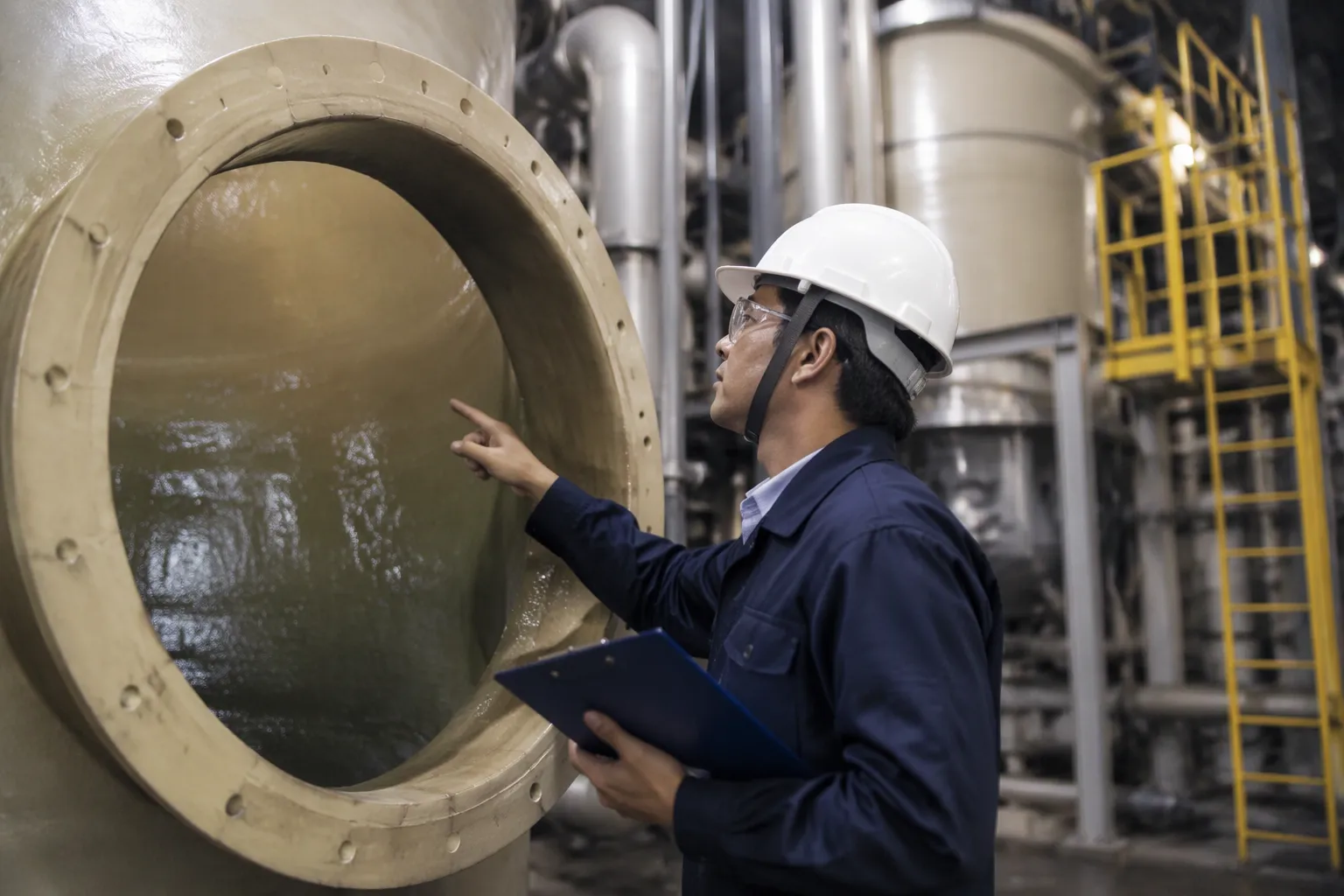
For most acid scrubber settings, novolac epoxy vinyl ester is the best overall grade. This grade holds up well where strong acids, higher temperatures, or solvent carryover show up. Engineers and specifiers can treat it as the default starting point for scrubber liners and structural layers.
The right Vinyl Ester Resin choice still depends on several factors. Acid type and concentration set the chemical demand. Operating temperature, mechanical and thermal cycling, fire safety requirements, and budget shape the final decision. A clear decision framework helps readers confirm whether novolac fits their conditions or whether another grade serves them better.
Key Takeaways
Novolac epoxy vinyl ester is the best standard grade for most acid scrubbers.
Think about the type of acid, the temperature, and fire safety when you pick a resin grade.
Bisphenol-A works well with weak acids at normal temperatures.
Brominated types give fire protection for closed setups.
Always check your choice against the real acid mix, temperature, and local codes.
Key Requirements For Acid Scrubbers
Chemical And Thermal Demands
The type and strength of the acid are the first things to check when picking a resin. Sulfuric, hydrochloric, nitric, and mixed acids break down polymer chains at different speeds. Oxidizing acids cause a second kind of damage by breaking down the ester linkages. Scrubber designers must match the resin to the real mix of acids, not just a general "acid service" label. A grade that works for weak hydrochloric acid may fail in strong sulfuric acid. Swings in concentration during upset conditions need the same review as normal operation.
Heat makes things harder. Reactions speed up as temperature rises, so a resin that works well at room temperature may break down fast in a hot flue gas stream. Extra heat protection matters most at the liner surface, where hot condensate touches the resin first. Well-specified FRP with vinyl ester resin often lasts 15–25 years in mixed acid service. That service life depends on choosing the right grade, using enough thickness, and a proper post-cure.
Mechanical And Regulatory Demands
Scrubber shells go through constant thermal cycling. Hot gas comes in, wash liquor cools the wall, and the cycle repeats. This movement puts stress on the liner and can cause blistering, delamination, and micro-cracking. Once cracks reach the structural layer, acid gets in and the vessel loses its integrity. The resin must handle these cycles without getting brittle, and the laminate must block permeation over decades of service. Mechanical loads from internal pressure, fan vibration, and wind add more strain.
Regulations add another layer. Fire codes control flame spread and smoke in occupied industrial sites. Emissions rules limit leakage and fugitive vapor release. Specifiers should check the resin's flame-retardant rating and the finished laminate's emission performance before approval. Documentation of cure schedule and test results supports that approval.
Vinyl Ester Resin Grades At A Glance
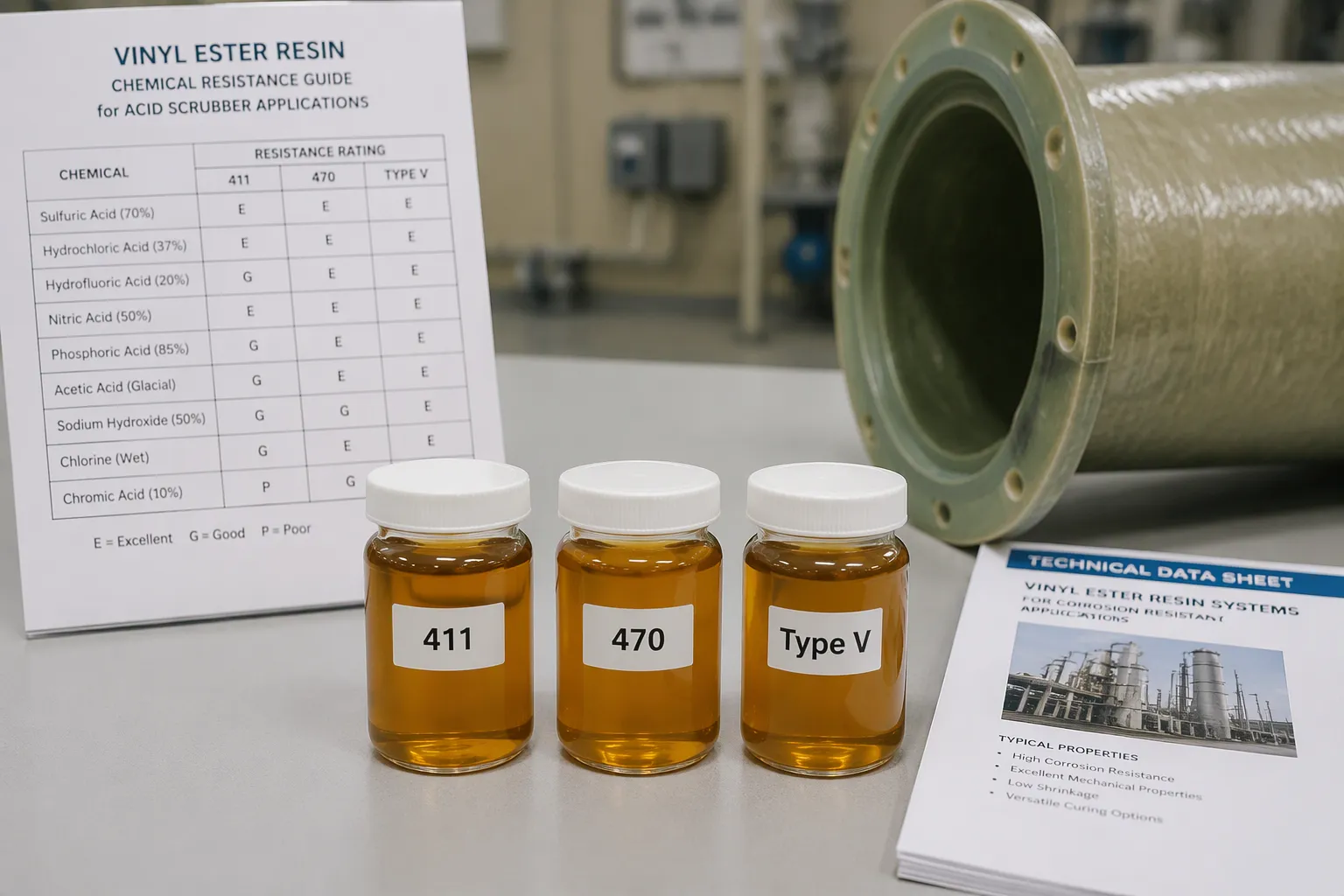
The Vinyl Ester Resin market sorts products into a few well-known families. Each family has its own chemistry, and each chemistry fits a different mix of scrubber conditions. The names sound technical, but the logic behind them is simple. Buyers who know the family names can read a data sheet faster and ask sharper questions.
Bisphenol-A And Novolac Epoxy Grades
Bisphenol-A epoxy vinyl ester, often called the 411 series, is the standard workhorse grade. It resists a wide range of acids, alkalis, and hypochlorites at moderate temperatures. Most dilute-acid scrubber duty falls within its comfort zone. The 411 series also wets out glass well and cures predictably, which keeps fabrication simple. Thickness and post-cure still decide the final service life.
Epoxy novolac vinyl ester, known as the 470 series, adds more crosslink density and more aromatic rings to the polymer backbone. That structure blocks acid attack and holds stiffness at higher temperatures. The 470 series handles concentrated acids, solvent carryover, and hot condensate better than the standard grade. Higher crosslink density also lowers shrinkage, which helps the laminate stay tight against the shell. Specifiers often choose it for the corrosion liner in severe service.
Type V vinyl ester appears in ASTM C581 and similar industry references. This classification covers resins tested for acidic and caustic service. A Type V label tells the buyer the resin passed a recognized corrosion test, not that it fits every acid. A resin can pass one acid test and still struggle in another medium. The test medium and temperature still matter.
POLYMER's Epoxy & Vinyl Ester Resin covers this range with multiple grades. The product line delivers a heat deflection temperature above 105°C. Buyers can also request flame-retardant, food-grade, weather-resistant, and other customized formulations. The company's automated synthesis lines keep batch performance consistent. That flexibility lets a fabricator source liner and structural resins from one supplier.
Brominated And Elastomer-Modified Grades
Brominated vinyl ester carries halogen atoms in the polymer chain. These atoms interrupt the combustion cycle and raise the flame-retardant performance of the finished laminate. Scrubbers installed in enclosed buildings or near occupied areas often need this property. Smoke ratings and flame spread data belong in the specification package. The grade trades some chemical resistance for fire safety, so engineers reserve it for cases where fire codes drive the design.
Elastomer-modified vinyl ester blends rubber-like segments into the resin network. The modification absorbs strain from thermal cycling and mechanical shock. Liners in scrubbers with rapid temperature swings benefit from this toughness. Impact damage during transport and erection is a common failure source, and this grade resists it well. Its acid resistance sits close to the standard bisphenol-A level, so it fits moderate chemical duty with high mechanical demand.
Fabricators should match the family to the dominant risk. A concentrated-acid stream points to novolac. A fire-rated enclosure points to brominated. A cycling vessel points to elastomer-modified. Each family has a place, and no single grade wins everywhere. The next section compares these Vinyl Ester Resin families on performance, cost, and lifecycle fit.
Comparing Vinyl Ester Resin Grades
Performance, Application, And Compliance
The grades differ most in the kinds of acid they can handle. Bisphenol-A works with dilute acids and hypochlorites at moderate heat. Novolac covers concentrated acids, solvents, and hot condensate. Brominated grades give up some chemical range to gain fire performance. Elastomer-modified grades are close to bisphenol-A chemistry but add more toughness.
Temperature limits follow the same pattern. Novolac keeps its stiffness at higher temperatures. Bisphenol-A suits moderate duty. Mechanical properties split along similar lines. Novolac shrinks less and stays tight against the shell. Elastomer-modified grades soak up impact and thermal strain. Brominated grades act like their base chemistry under load.
Application ease favors the standard grade. Bisphenol-A wets out glass quickly and cures predictably. Novolac demands tighter process control. Curing behavior decides final chemical resistance for every family. A post-cure of 2 hours at 80°C then 2 hours at 100°C builds full crosslink density. Skipping this step leaves the laminate short of its rated performance.
Fire safety sets brominated grades apart from the rest. Halogen atoms in the chain slow combustion and cut flame spread. Specifiers should confirm smoke ratings against local codes before approval.
Cost And Lifecycle Fit
Standard bisphenol-A carries the lowest unit cost. Novolac costs more per kilogram, yet its longer service life in severe duty often makes up the gap. Buyers should weigh resin price against replacement cost and downtime.
Reinforcement choices matter as much as resin choice. C-glass in the most acid-exposed zones resists attack better than standard E-glass. The corrosion liner carries the chemical load, and the structural layer carries the mechanical load. Matching each layer to its job avoids overspending on the whole laminate.
POLYMER's High Temperature Epoxy Fibreglass Resin (PLM-4470) offers one option for scrubbers and FGD towers. The formulation resists hydrolysis under heat and suits both liner and structural layers. That dual use simplifies inventory for fabricators running automated winding lines.
Matching Grade To Scrubber Conditions
Concentrated Acid And High Temperature
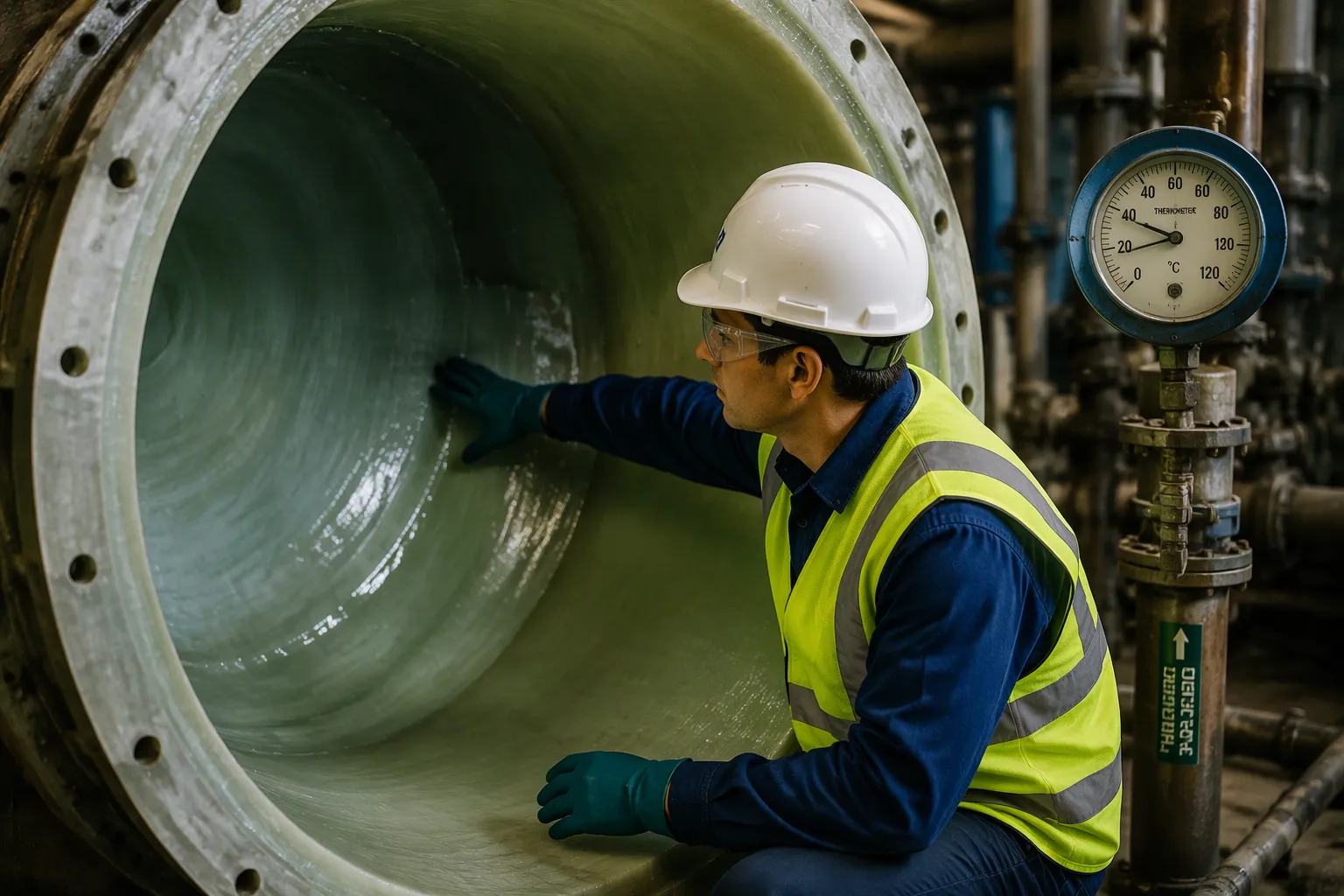
A scrubber that deals with strong sulfuric or hydrochloric acid at high heat puts the most strain on the liner. The 470 series novolac grade works best for this job. Its tightly linked structure fights off acid and stays stiff when the wall gets hot. Specifiers should use C-glass in the most exposed areas and make sure the full post-cure happens: 2 hours at 80°C, then 2 hours at 100°C. That schedule builds the crosslink density the data sheet expects. A laminate that skips post-cure will not reach its rated chemical resistance, even with the right resin.
Solvent carryover belongs in the same discussion. Organics in the gas stream can soften a standard liner over time. Novolac chemistry puts up with that exposure better than bisphenol-A. Plants with upset conditions that push concentration or temperature above normal design points should treat novolac as the safer choice for the corrosion barrier.
Dilute Acid, Oxidizers, And Fire Safety
Moderate dilute-acid duty does not need the top grade. The 411 series bisphenol-A grade handles dilute acids, hypochlorites, and many oxidizers at moderate temperature. It wets out glass fast and cures in a predictable way, which keeps fabrication cost and scrap low. A scrubber running weak acid at modest heat can use 411 for the liner and hit its service target without overspending. Well-built FRP with vinyl ester resin often reaches 15–25 years in mixed acid service when thickness and cure are right.
Fire safety changes the answer. A scrubber inside an enclosed building or near occupied areas may face strict flame spread and smoke limits. Brominated grades fit that case, because halogen atoms in the chain slow combustion. The trade-off is a narrower chemical range, so engineers should confirm the acid spectrum still falls within the grade's limits.
Thermal cycling and mechanical shock point to elastomer-modified grades. A vessel that swings between hot gas and cool wash liquor, or one that takes impact during erection, gains from the added toughness. Its acid resistance stays close to the bisphenol-A level, so it suits moderate chemical duty with high mechanical demand.
The table below maps each condition to its best-fit family.
Scrubber condition | Best-fit grade family |
|---|---|
Concentrated acid, high temperature, solvent carryover | Novolac (470 series) |
Dilute acid, oxidizers, moderate temperature | Bisphenol-A (411 series) |
Strict fire codes, enclosed installation | Brominated |
Thermal cycling, impact, mechanical shock | Elastomer-modified |
No grade wins everywhere. Each family fits a defined set of conditions, and the specifier's job is to match the family to the dominant risk. A final check against the actual acid spectrum, temperature profile, and local fire code confirms the choice before the laminate goes into production.
Novolac epoxy vinyl ester is still the go-to choice for most acid scrubber work. It resists many acids and handles higher heat, which covers the tough conditions scrubbers often face. Engineers who begin with this grade get a solid starting point for liners and structural layers.
The decision logic is simple. Bisphenol-A works for moderate dilute-acid duty. Brominated grades serve sites where fire safety is the main concern. Elastomer-modified grades fit vessels that need extra toughness or face thermal cycling. Each family has its place when conditions call for it.
Readers should check their choice against the real acid mix, the actual temperature profile, and local fire codes before specifying. A final check against these three factors protects the laminate and the money behind it.
FAQ
Does a vinyl ester liner need post-cure?
Yes. A post-cure of 2 hours at 80°C and then 2 hours at 100°C builds full crosslink density. This step brings out the resin's rated chemical resistance and its heat deflection temperature above 105°C. A laminate that skips post-cure does not reach its data sheet performance, even with the correct grade.
Can fabricators use standard polyester promoters with vinyl ester?
No. Vinyl ester resin needs specific cobalt naphthenate promoters, and some formulations also need added dimethylaniline (DMA). Standard unsaturated polyester promoters will not give a reliable cure. Suppliers should provide the complete matching curing system with the resin order.
How should a plant store vinyl ester resin?
Vinyl ester resin has a shorter shelf life than unsaturated polyester resin, usually 3–6 months. It must sit in a dark, cool place below 25°C. Stock rotation keeps older drums moving first. Buyers should plan orders around actual use rather than building large inventories.
Is novolac always required for acid scrubbers?
No. Novolac (470 series) fits concentrated acid, high temperature, and solvent carryover. Dilute-acid duty at moderate temperature works well with bisphenol-A (411 series). Fire-rated installations point to brominated grades, and cycling vessels favor elastomer-modified grades. The dominant risk decides the family.
How does a specifier confirm the grade choice?
Check three inputs: the actual acid spectrum, the real temperature profile, and local fire codes. Compare each against the resin data sheet and its corrosion test results. A Type V classification confirms recognized acid and caustic testing, but the test medium and temperature still govern fitness.