




What Is Unsaturated Polyester Resin (UPR)?
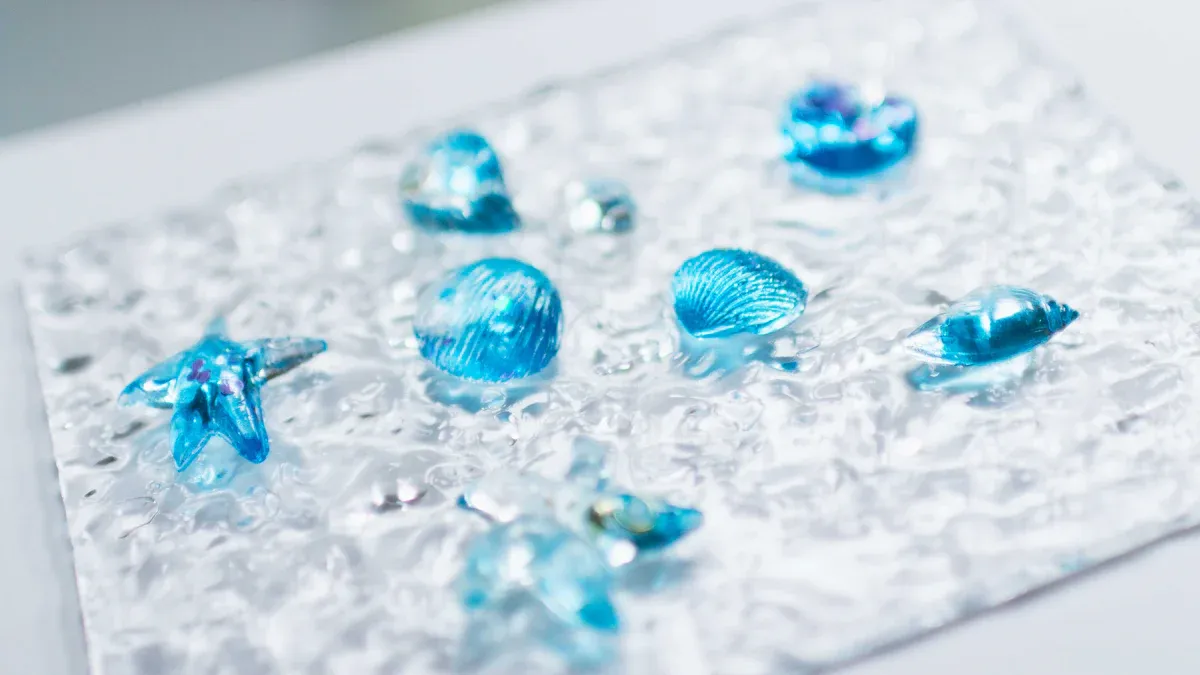
UPR resin, also known as unsaturated polyester resin, is a thermosetting polymer that hardens permanently when a catalyst and heat are applied. Its molecular backbone has double bonds that allow crosslinking with styrene, forming a strong three-dimensional network. This thermosetting material offers high mechanical strength, low shrinkage, excellent chemical resistance, and low cost. UPR resin is widely used in fiberglass-reinforced plastics (FRP) for pipes, chemical storage tanks, construction panels, marine hulls, automotive parts, and electrical insulators. Common products include artificial marble, boat hulls, and wind turbine blades. This article covers the chemical composition, production process, key properties like gel time, major applications, advantages and disadvantages, and comparisons with epoxy, vinyl ester, and thermoplastic resins.
Key Takeaways
UPR resin is a strong, light plastic that fights rust and costs less than many other materials.
You can change how long UPR takes to cure to match different molding processes, helping you produce items efficiently.
UPR is used in many everyday products, from boat hulls to bathroom countertops, because it is useful in many ways and lasts a long time.
UPR has some limits, like it can't handle high heat well, but it is still a low-cost choice for everyday composites.
When you compare it to epoxy and vinyl ester, UPR gives you a good mix of strength and performance at a lower cost for many uses.
UPR Composition and Production
Chemical Makeup of Unsaturated Polyester Resin
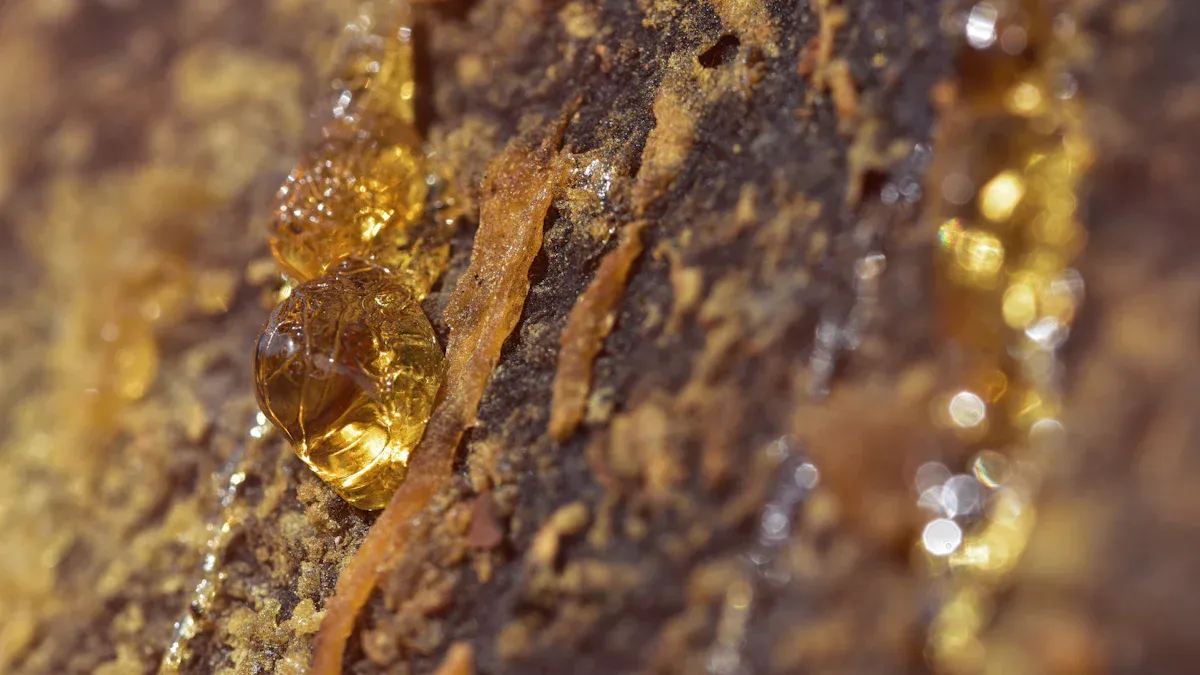
The molecular backbone of an unsaturated polyester resin has carbon–carbon double bonds. These double bonds are the main difference from saturated polyester resins. They let the polymer chains link together during curing. This linking process is called crosslinking.
The reactive double bond sits in the polymer backbone of unsaturated polyester. In vinyl ester, the reactive double bond sits at the end of the molecule instead.
Three building blocks form the resin. Unsaturated acids, such as maleic anhydride, bring in the reactive double bonds. Saturated acids, such as isophthalic acid, adjust the final properties. Diols, such as propylene glycol, connect the acid units into chains.
Maleic anhydride forms maleate units in the backbone. During synthesis above 180°C, these units partly isomerize to fumarate units. Fumarate units are about 3–5 times more reactive toward styrene. The trans geometry lines up the double bond better for copolymerization. Without these backbone double bonds, the polyester would stay thermoplastic and could not crosslink with styrene.
Saturated diacids also shape performance. Aromatic diacids such as phthalic or isophthalic acid help create higher glass transition temperatures and better thermal stability.
Aromatic diacids such as phthalic or isophthalic acid help create higher glass transition temperatures and better thermal stability.
Property
General/Modern Polyester Systems
Isophthalic or Terephthalic-Based Polyester Systems
Hydrolytic (chemical) resistance
Improved in some modern and bio-based systems, but less robust than optimized polyesters
Superior, particularly in isophthalic- or terephthalic-based formulations
In tough environments such as coastal or high-humidity areas, hydrolysis-resistant polyester formulations—for example, those based on isophthalic or terephthalic acids—give better long-term durability.
How UPR Resin Is Manufactured
Production starts with polycondensation. Glycols and dibasic acids react at high temperatures. Ester linkages form, water is removed as a by-product, and molecular weight slowly increases.
The industrial esterification process runs in stages:
Saturated diacids react with excess glycols at 160–200°C under nitrogen. This makes hydroxyl-terminated oligomers. Water is removed by distillation.
Unsaturated diacids are added, and the temperature rises to 180–220°C. Reaction continues until the acid number falls below 20 mgKOH/g.
Polymerization inhibitors such as hydroquinone stop premature crosslinking of the double bonds.
Catalysts change maleate esters to the more reactive fumarate form.
Nitrogen blanketing and vacuum control protect quality. Acid number and viscosity are checked throughout.
After synthesis, the prepolymer is dissolved in styrene monomer at a typical concentration of 10–50 wt%. This step lowers viscosity and adds crosslinking sites. Alternative reactive diluents such as methyl methacrylate may also be used. Styrene content affects volatile organic compound emissions, and some formulations achieve up to 30% styrene reduction while keeping mechanical performance.
Copromoters further improve curing and final product characteristics. Common examples include acetoacetoxy ethyl methacrylate, acetoacetoxy ethyl acrylate, and C1-C8 linear or branched alkyl acetoacetates. These are used at not more than 10 wt-%, preferably not more than 6 wt-%.
Key Properties of UPR Resin
Physical and Mechanical Properties
Unsaturated polyester resin has a special mix of low weight and high strength. After curing, it exhibits high tensile strength and flexural strength with moderate elongation at break. These properties show that composite parts can carry heavy loads without breaking. The material is light and stiff. This weight advantage cuts shipping costs and makes installation easier.
UPR resin is valuable in harsh environments because it resists corrosion. It can handle water, chemicals, and outdoor conditions for a long time. Unlike traditional materials, it does not rust or rot. Ships, chemical tanks, and infrastructure projects depend on this property. UV resistance helps parts stay shiny and colorful after sun exposure. Low shrinkage during curing makes parts stable and gives them a high-quality surface. Manufacturers get smooth finishes without much sanding.
Different types of resin are used for different jobs. Orthophthalic resins are a low-cost choice for general FRP products. Isophthalic resins give better water and chemical resistance for tough applications. Both types work well in their own uses. Thermomechanical properties stay steady over a useful temperature range. This balance of properties makes unsaturated polyester resin good for construction panels, car parts, and electrical parts. The resin works well with many manufacturing methods.
Curing Behavior and Gel Time in Unsaturated Polyester Resins
Curing turns liquid resin into a solid crosslinked network. The double bonds react with styrene monomer. This reaction releases heat. During gel time, the part’s temperature rises. The heat helps the reaction finish.
Many things control the curing process. Temperature directly affects how fast the reaction goes. Higher temperatures make the reaction faster and shorten gel time. Lower temperatures slow it down a lot. Promoters like cobalt compounds speed up the reaction. Inhibitors delay the start. Manufacturers change these additives to get the right work time.
For hand lay-up grades, gel time is typically set to allow workers to wet out fiberglass layers well and shape the laminate before it gels. After gel, the part hardens and gets strong. Full curing may need more time at room temperature or with post-cure heating. Post-cure improves the final mechanical properties.
The initiator starts the crosslinking reaction of the unsaturated polyester resin. Methyl ethyl ketone peroxide is often used. The promoter lets the reaction happen at room temperature. The ratio of initiator to promoter controls the gel time and peak exotherm temperature. Gel time in unsaturated polyester resins can be adjusted for different making processes.
Right gel time stops defects. If gel is too fast, there is no time to lay up correctly. Slow reactivity makes production take longer. Formulations balance these factors for each process. Filament winding needs faster reactivity than hand lay-up. Vacuum infusion needs controlled reactivity to fill completely.
The transition point is when the resin changes from liquid to solid. After this point, the part cannot be reshaped. The exotherm peaks after this point. Thick parts may get too hot and crack. Formulators design systems with the right reactivity for each use.
Common Applications of UPR Resin

Industries That Use UPR
In 2023, the building and construction industry used about 31% of all unsaturated polyester resin. This resin is used for roofing, pipes, wall panels, and electrical boxes. These products need to be strong, resist corrosion, and be low-cost. As more buildings and roads are built, demand for UPR materials keeps growing.
Fiber-reinforced plastics (FRP) are a main use for this type of polyester. FRP pipes, tanks, panels, and structural parts all depend on these resins. The market counts tanks and pipes as a separate use, apart from building and construction. Other important industries are marine, cars, electrical and telecom, chemical storage, and bathroom fixtures.
POLYMER (POLYMER) was started in 2018 in Changzhou, China. It is a one-stop supplier of composite materials. The company sells unsaturated polyester resin in orthophthalic, isophthalic, DCPD-modified, and vinyl ester types. Its PLM-1001 High-Strength Filament Winding Resin and Hand Lay-up UPR work well for large pipes, heavy storage tanks, and chemical tank builders. Marine engineering products include fishing boats, yachts, and docks.
Everyday Products Made with UPR
People use this material every day without realizing it. Bathroom tubs, showers, bathtubs, and vanity tops often use synthetic marble made from UP resin. Kitchen countertops and sinks use the same material. Recreational items include boats, surfboards, skis, helmets, swimming pools, and hot tubs.
Category | Household items using polyester resin |
|---|---|
Bathroom products | tubs, showers, bathtubs, sinks, vanity tops, synthetic marble countertops |
Kitchen and surface products | countertops, sinks, synthetic marble surfaces |
Recreational and home items | boats, surfboards, skis, helmets, pools, hot tubs, sporting goods |
Other products | automobile body filler, bowling balls, coatings |
Artificial marble and solid surfaces are major casting uses. Car parts and wind turbine parts also rely on these composites. UPR resin is very versatile, so it stays important in modern manufacturing.
Advantages and Disadvantages of UPR
Benefits of Using UPR
Unsaturated polyester resin gives you a strong set of benefits. It is light in weight but still strong. It fights off rust from water and chemicals. This makes it great for tough places. The resin works with many molding methods. You can adjust how it cures for each method. Manufacturers can pick formulas made just for them. There are eco-friendly choices too.
The cost benefits are easy to see:
Raw material costs less than epoxy because UPR uses feedstocks that are easy to find.
Catalyst costs less since UPR uses cheap peroxide initiators like MEKP.
Processing costs favor UPR because it can cure at room temperature, which cuts energy costs.
Molding works with low-cost, high-volume methods like SMC/BMC.
Total cost of ownership is appealing because durable formulas mean less maintenance.
Global supply chain size keeps prices steady.
Compared to other thermoset resins, UPR gives you better cost efficiency.
UPR formulas stay the cost-performance baseline in composite uses, keeping their spot as the highest-volume thermoset matrix system in global laminating work.
POLYMER's unsaturated polyester resin adds to these benefits. It has formulas you can customize, DCS-controlled batch consistency, and eco-friendly certification. The resin gives high mechanical strength, low shrinkage, high gloss, and UV resistance.
Limitations and Drawbacks
This resin has some limits. The biggest one is poor performance at high temperatures.
Formulation | HDT at 1.82 MPa | Continuous Service Temp |
|---|---|---|
Orthophthalic | Lower | Typically below HDT |
Isophthalic | Higher | Typically below HDT |
Bisphenol A fumarate | Highest | Typically below HDT |
Continuous service temperature is typically below the HDT. Even the best polyester grades have limited high-temperature performance, which restricts their use in demanding thermal environments.
Shrinkage during curing is another problem. The material shrinks as it hardens. This can change its size and shape. Formulators add low-shrink additives to reduce this effect.
Styrene emission concerns also affect this resin. The European Union enforces strict rules through the Industrial Emissions Directive and REACH regulation. Manufacturers must use closed-loop processes instead of open mold methods. Companies must meet these rules to stay competitive.
Epoxy and thermoplastic resins also compete with unsaturated polyester resin. But for most general-purpose composite work, this resin is still the most cost-effective choice.
UPR vs. Other Resins
UPR vs. Epoxy and Vinyl Ester
Epoxy costs more than unsaturated polyester resin. Epoxy also gives stronger mechanical strength and handles heat better. The way the two cure is very different. Epoxy typically has a longer pot life and recoat time, requiring more time to achieve full cure compared to polyester, which cures much faster. This faster curing saves time, but it also gives off more heat. That higher heat can overheat thick parts. Epoxy works well for high-performance aircraft parts and structural adhesives. UPR resin fits boats, tanks, and general construction panels where cost matters most.
Vinyl ester falls between the two on cost and performance. It resists alkaline attack better than unsaturated polyester resin. In tests with NaOH and Na2CO3 solutions, vinyl ester composites showed less color change than UPR composites. The reason is in the molecular structure. Vinyl ester has phenyl ether bonds in its epoxy backbone. These bonds resist alkaline attack better than the ester bonds in UPR. Ester linkages in vinyl ester appear only at chain ends, which limits weak points. Vinyl ester costs more, so buyers choose it for chemical plants and severe corrosion service. UPR remains the budget choice for milder environments.
UPR vs. Thermoplastic Resins
Thermoplastic resins can melt and be reshaped. This makes them recyclable in ways thermosetting polyester cannot match. Processing also differs. Thermoplastics use heat and pressure to form parts. UPR and other thermosetting resins cure chemically and cannot be remelted. Structural performance favors different sides. Thermoplastics offer high impact resistance. UPR offers high stiffness and low cost in large composite parts. Each family serves its own market. UPR holds a unique spot as a versatile, cost-effective thermosetting resin. It balances price, strength, and process flexibility for composites across many industries.
Unsaturated polyester resin is a thermosetting polymer with double bonds that link together into a strong network. This guide covered its makeup, how it is made, key properties like gel time, and major uses. Unsaturated polyester resin gives you lightweight strength, resistance to corrosion, and money savings. Its limits include lower heat tolerance and shrinking when it cures. Compared to epoxy and vinyl ester, UPR resin is still the budget-friendly pick for general composites. In short, unsaturated polyester resin is a versatile, low-cost material that hardens permanently for strong, lasting parts. Industries still depend on it for pipes, tanks, boats, and construction. Its role in composite materials will stay important as manufacturing changes.
FAQ
What is the difference between orthophthalic and isophthalic resin?
Orthophthalic resin costs less and works well for general FRP products. Isophthalic resin resists water and chemicals better. Marine and corrosive environments need isophthalic grades. Both types are forms of unsaturated polyester resin. Your choice depends on the final application and budget.
How does temperature affect gel time?
Higher temperatures shorten gel time significantly. Lower temperatures slow the reaction. Formulators adjust promoter and inhibitor levels to match your climate. Hand lay-up grades typically gel in a window that lets workers wet out fiberglass and remove air bubbles.
What is the best way to store this resin?
Store unsaturated polyester resin in a cool, dry, well-ventilated area below 25°C. Keep it away from direct sunlight and heat sources. Proper storage maintains the resin's shelf life as recommended by the manufacturer.
What packaging options are available for shipping?
The resin comes in standard industrial packaging such as iron drums or IBC tanks, ensuring safe transportation. Bulk orders ship safely with these options.
Can formulations be customized for specific processes?
Yes. Manufacturers adjust viscosity, reactivity, and additives for filament winding, hand lay-up, RTM, or vacuum infusion. Custom formulations ensure optimal performance for each molding method. Technical support helps match the right resin to your production needs.