




What HDT Does Vinyl Ester Resin Need for Hot Pipes?
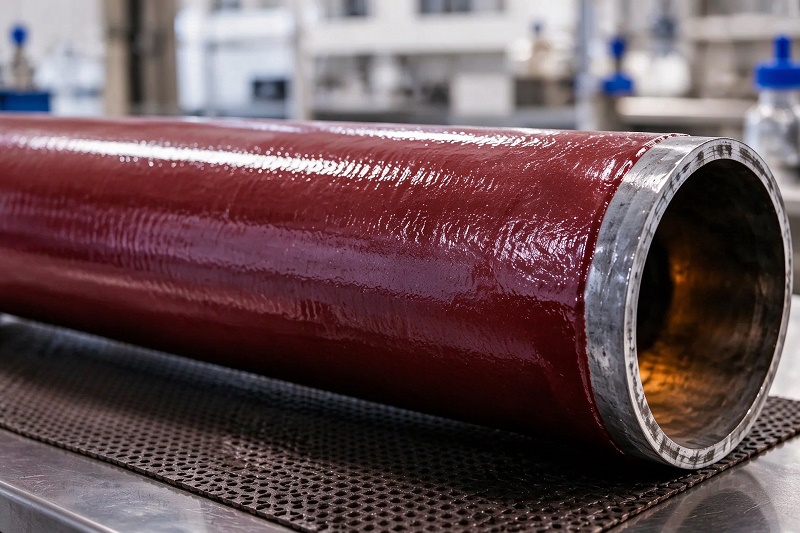
Vinyl ester resin usually needs a heat deflection temperature (HDT) of at least 100°C (212°F) for hot pipe use. The exact value depends on the highest operating temperature plus a safety margin. A resin with a higher HDT keeps its shape and strength better when hot fluids flow through the line.
This post explains how technicians measure HDT under load. It also shows how to calculate the value you need for a given pipeline. Readers will learn how to compare standard and high-HDT grades and choose the right pipe resin for their service conditions.
Key Takeaways
Vinyl ester resin for hot pipes needs an HDT of at least 100°C (212°F).
Figure out the HDT you need by adding a safety margin to the highest operating temperature.
Heat-treat the resin after it sets so it reaches its full HDT and lasts a long time in service.
Pick high-HDT types for hot, harsh chemicals; regular types cost less on cooler lines.
Always check the HDT test conditions and confirm them with your supplier before production.
HDT Basics For Pipe Resin Service
What HDT Measures Under Load
HDT is the temperature where a resin sample bends a set distance under a set bending load. ASTM D648 controls this test. A technician heats a bar-shaped sample at a steady rate and puts a fixed load on its center. The reported HDT is the point where the sample bends past the allowed limit. This number tells engineers how much heat a cured resin can take before it softens and loses stiffness.
The test conditions matter. A resin tested under a light load reports a higher HDT than the same resin under a heavy load. Buyers should always compare HDT values measured under the same ASTM D648 load. A datasheet figure without test conditions offers little practical value for pipe design.
Why HDT Matters In Liners
Standard vinyl ester resins show limited heat resistance near 100°C (212°F). Hot pipe service pushes the liner close to that ceiling. A liner that softens loses its barrier against the fluid inside. Chemical attack then speeds up, and the pipe wall can blister or crack. Verified HDT data lets a specifier confirm the pipe resin holds its properties at the real service temperature.
Vinyl ester beats ortho polyester in hot-water and hot-pipe duty. Ortho polyester fits general-purpose lines at moderate temperatures and lower cost. Vinyl ester brings greater heat stability and chemical resistance to aggressive, hot service. Each chemistry has a proper place, and the service temperature decides which one fits.
Determining Your Required HDT
Matching HDT To Operating Temperature
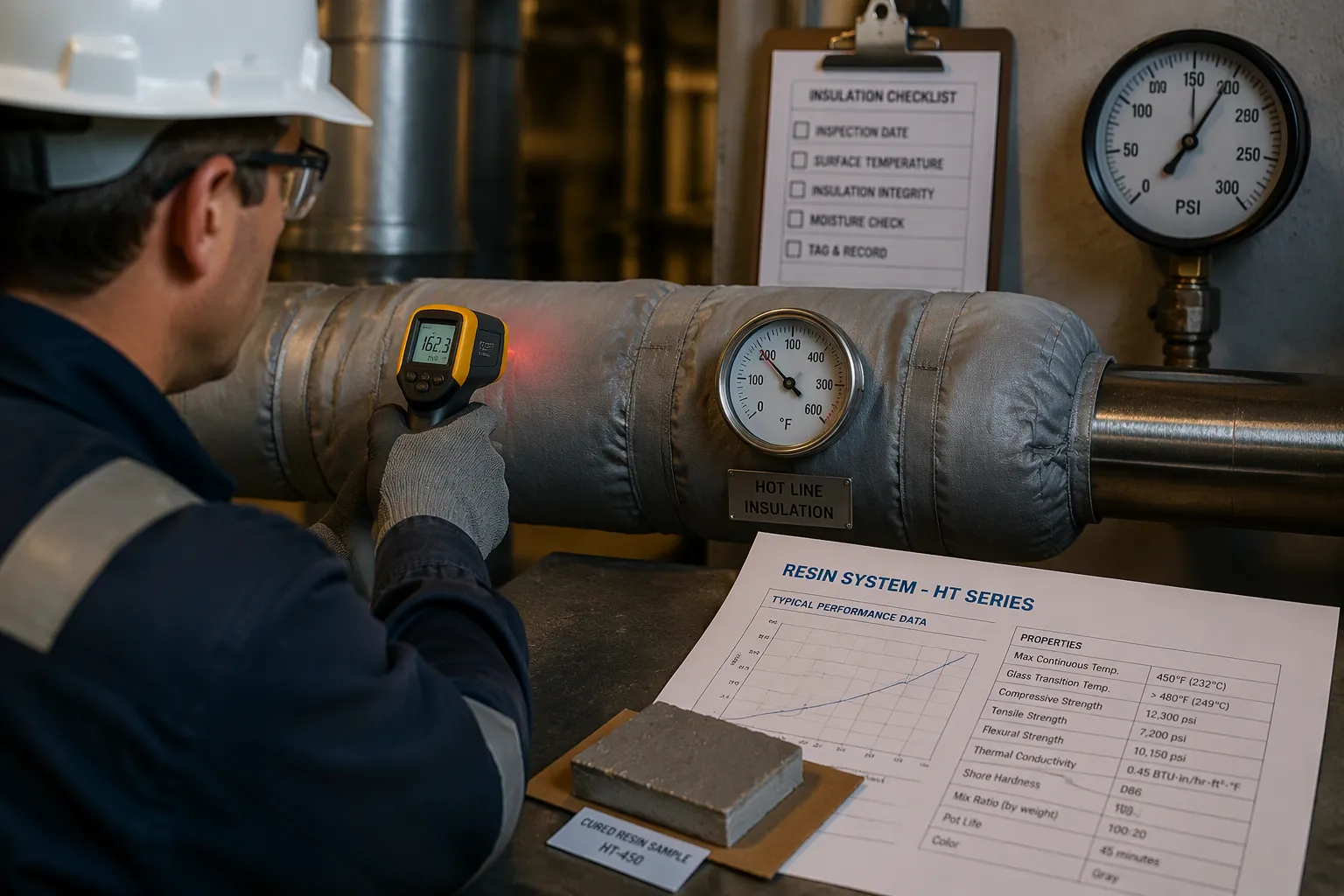
The basic rule is easy: required HDT equals the highest operating temperature plus a safety margin. The highest operating temperature is the hottest fluid the line will ever carry, not the average daily temperature. A designer should also think about heat from pumps, sun on exposed pipe runs, and short process upsets that push the fluid above its normal set point.
A worked example makes the rule clear. Suppose a chemical line carries fluid at 100°C (212°F). The designer adds a margin on top of that number. The resulting target sits above the service temperature, so the cured resin keeps its stiffness with room to spare. A pipe resin rated at 105°C, such as POLYMER's Epoxy & Vinyl Ester Resin, clears this example with a small cushion. A line running closer to the resin's rated ceiling leaves little room for upsets.
The margin covers several real-world effects. Temperature sensors read low, control loops overshoot, and ambient conditions change by season. The margin also absorbs the normal scatter in HDT test results between production batches. A tight margin turns a small process excursion into a softening event. A sensible margin keeps the liner well below its deflection point during normal operation.
Applying Safety Margins And Standards
ASTM D648 is the reference test for HDT, and a supplier datasheet should state the load used during the test. Buyers should compare values only when the test load matches. A figure quoted without test conditions tells the specifier very little.
Standards for FRP pipe and tank service also shape the required value. Design codes for corrosion-resistant equipment tie resin selection to the chemical medium, the concentration, and the service temperature together. The HDT requirement follows from that combination, not from temperature alone. A resin that suits a hot, mild fluid may not suit a cooler but highly aggressive one.
Datasheet values come from standardized specimens, and real pipes differ. Wall thickness, cure history, and reinforcement pattern all shift the effective heat resistance of a laminate. A thin liner section may run hotter than the bulk wall because heat passes through it quickly. The specifier should confirm the HDT figure against the actual pipe construction and the actual fluid conditions. A short conversation with the resin supplier resolves most of these questions before production begins.
What Affects Vinyl Ester HDT
Curing And Post-Cure Effects
A resin only reaches its rated HDT after it is fully cured. When cured at room temperature, some styrene stays unreacted and the cross-links stay loose in the laminate. Post-curing finishes the reaction and makes the polymer network tighter. A tighter network raises the temperature at which the resin softens under load. A common schedule for vinyl ester pipe resin is two hours at 80°C, then two hours at 100°C. The first stage moves the reaction forward at a moderate rate. The second stage brings the network to its final density.
Post-cure schedule: 2 hours at 80°C, then 2 hours at 100°C.
Thin sections need this step the most. A liner only a few millimeters thick cannot make enough exothermic heat to cure itself fully. There is too little mass, and heat escapes into the pipe wall and the fluid side. A thick laminate may self-heat during cure, but a liner rarely does. Without post-cure, the liner stays under-cured, and its real HDT drops well below the datasheet figure.
Formulation And Reinforcement Influence
Resin chemistry sets the top limit for heat resistance. Novolac vinyl ester has more aromatic rings and cross-link sites than standard bisphenol-A vinyl ester. That structure gives it a higher HDT and stronger resistance to aggressive media. The choice of reinforcement also matters. Glass fiber keeps its stiffness at temperatures where the resin alone would soften, so a well-reinforced laminate holds its shape longer under load.
POLYMER's Epoxy & Vinyl Ester Resin is made for high-temperature, anti-corrosion pipe service, with HDT above 105°C. This grade fits demanding lines where standard resin would run too close to its limit. Specifiers should still check the cure schedule and laminate build with the supplier, because both shape the final HDT of the finished pipe resin.
Standard Vs. High-HDT Pipe Resin Grades
Performance, Compliance, And Cost Trade-Offs
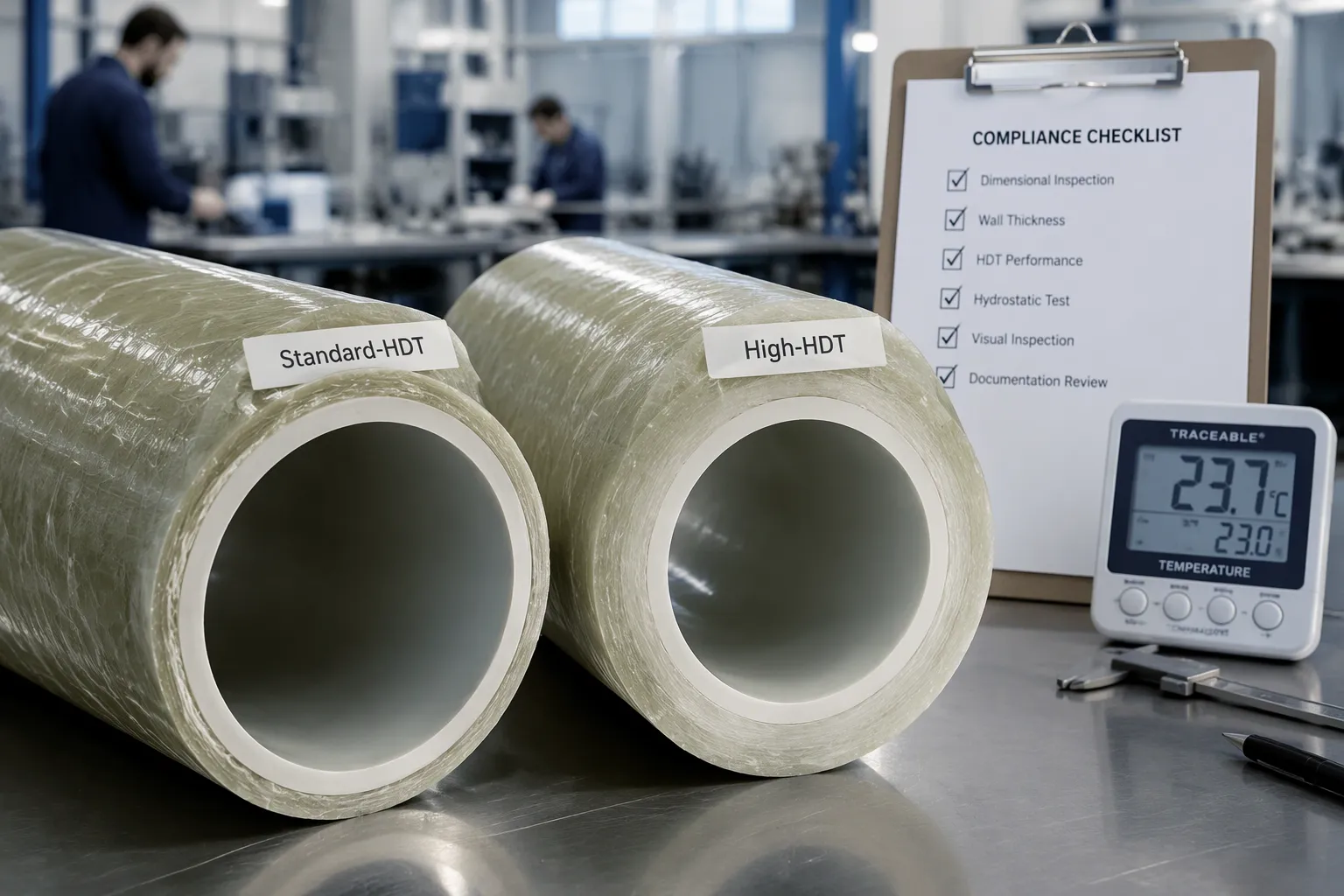
Standard and high-HDT grades sit at different points on the same performance curve. Standard vinyl ester grades meet the 100°C (212°F) baseline for many hot-water and moderate chemical lines. High-HDT grades, such as novolac vinyl ester, stay stiff at higher temperatures and fight aggressive media for longer. The table below shows the main trade-offs.
Factor | Standard-HDT Grade | High-HDT Grade |
|---|---|---|
Thermal performance | Meets the 100°C baseline with a small cushion | Keeps stiffness well above the baseline |
Chemical resistance | Good for mild to moderate media | Strong against chlorine, solvents, and strong acids |
Compliance | Fits common FRP pipe codes for moderate service | Supports demanding service and audit-heavy projects |
Cost | Lower material cost | Higher material cost, offset by longer service life |
Neither grade is the better buy every time. A standard grade keeps project costs down on lines that run well below its ceiling. A high-HDT grade earns its price on hot, aggressive service where a softened liner would mean early replacement. The right choice follows the service conditions, not a wish for the newest chemistry.
Compliance adds a second layer. Design codes for corrosion-resistant equipment tie resin selection to the medium, its concentration, and the service temperature. A high-HDT grade gives the specifier more headroom when a code demands a margin above the operating point. A standard grade meets the same codes on cooler, milder duty.
Matching Grades To Application Needs
POLYMER's pipe resin portfolio covers the full range of hot-pipe duty. Novolac vinyl ester handles chlorine-resistant, high-temperature service, including aggressive solvent lines and hot chemical transport. High-elongation filament winding grades suit automated production of cylindrical pipe, where fast wet-out and crack resistance matter. Hand lay-up grades serve fittings, flanges, and custom spool pieces, where the laminate goes down by hand and needs sag-free saturation on vertical surfaces.
Buyers with less demanding lines can step down to POLYMER's Unsaturated Polyester Resin. Ortho and isophthalic grades fit general-purpose pipe at moderate temperatures and lower cost. This option lets a fabricator match every line in a plant to its own duty, instead of over-specifying the whole network.
A practical selection sequence works through four steps. First, confirm the maximum service temperature and the chemical medium. Second, apply the safety margin to set the target HDT. Third, check the grade against the governing pipe standard. Fourth, weigh standard against high-HDT on total lifecycle cost. Each step narrows the field until one pipe resin grade remains. A supplier's technical team can confirm the final choice against the actual laminate build and cure schedule.
A vinyl ester pipe resin needs an HDT of at least 100°C (212°F) for hot pipe service. The working rule stays simple: required HDT equals the maximum operating temperature plus a safety margin.
Selection follows four steps. First, confirm the hottest service temperature and the chemical medium. Second, apply the safety margin to set the target HDT. Third, verify the grade against the governing pipe standard. Fourth, weigh standard against high-HDT grades on performance and cost.
Specifiers should confirm HDT data with the resin supplier against actual pipe conditions. POLYMER offers technical support and free test samples to guide material selection.
FAQ
Does a higher HDT resin always cost more?
A higher HDT grade usually costs more to buy. That extra money pays off with a longer service life on hot, harsh lines. On cooler jobs, a standard grade meets the code for less money. Buyers should compare the material price with the cost of replacement and downtime.
Can room-temperature cure reach the rated HDT?
No. A room-temperature cure leaves the network loose, so the laminate falls short of its datasheet HDT. Post-curing finishes the reaction and pulls the cross-links tighter. POLYMER suggests two hours at 80°C, then two hours at 100°C, for the best chemical resistance and cross-link density.
How does a fabricator verify HDT before production?
The fabricator asks for the datasheet HDT with its ASTM D648 test load listed. Then they check the cure schedule and laminate build with the supplier. POLYMER offers technical support and free test samples so buyers can test performance against real pipe conditions.
Which grade suits chlorine-resistant, high-temperature pipe?
Novolac vinyl ester fits this job. It stands up to chlorine, solvents, and strong acids at high temperatures. POLYMER's Epoxy & Vinyl Ester Resin reaches an HDT above 105°C. Filament winding grades work for cylindrical pipe, and hand lay-up grades cover fittings and flanges.
How should a buyer store vinyl ester resin before use?
Vinyl ester resin reacts fast and has a shorter shelf life than polyester, usually three to six months. The buyer keeps drums in a dark, cool place below 25°C. POLYMER ships the resin in 220KG iron drums or 1100KG IBC tanks.