





Isophthalic vs Orthophthalic: Which Isophthalic Resin Lasts Longer?
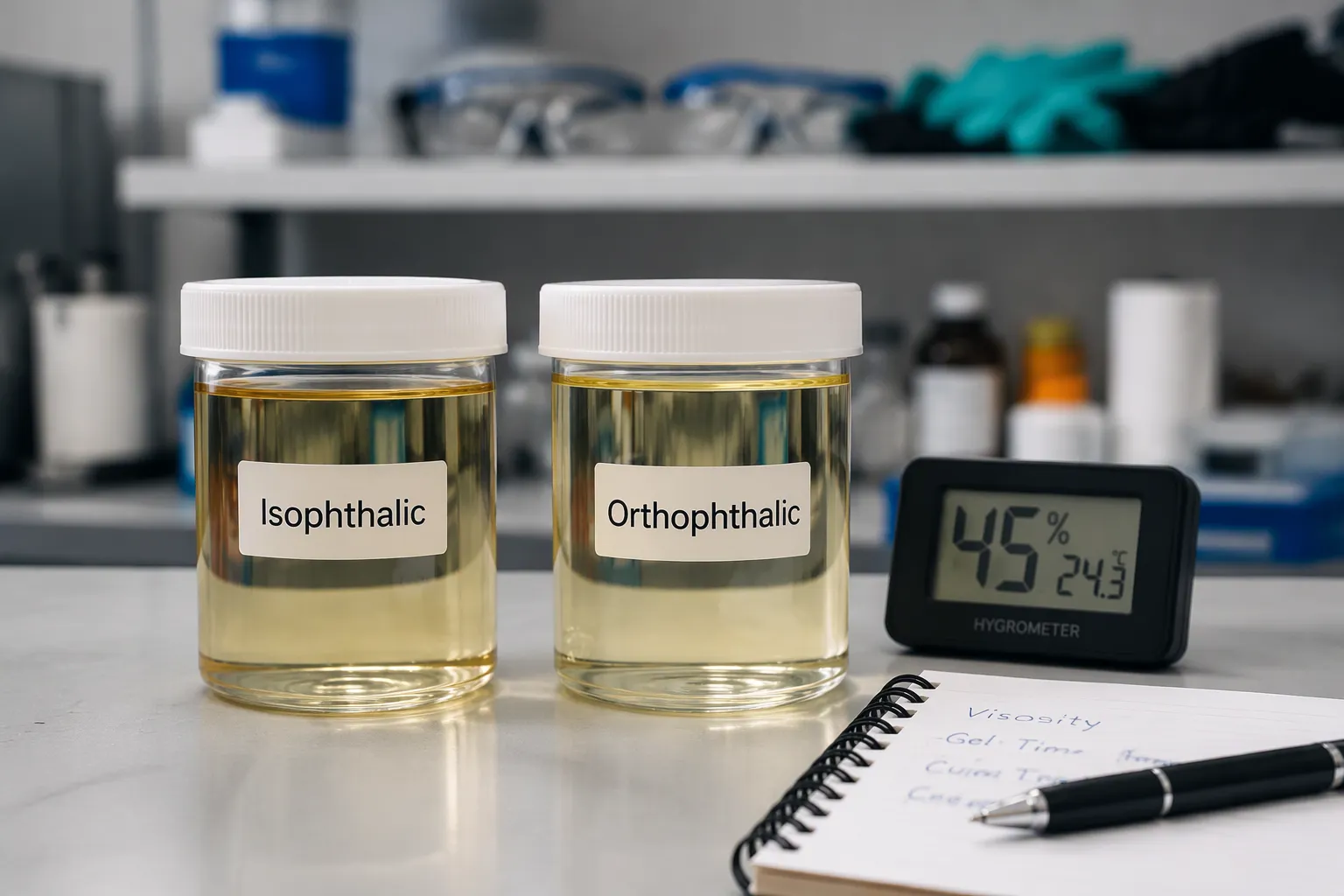
Isophthalic resin usually lasts longer than orthophthalic resin in tough service conditions. The difference comes down to hydrolysis and chemical resistance. Water and harsh chemicals attack weaker polymer structures first. That attack shows up as blistering, cracking, and early failure. Early replacement then raises maintenance bills and causes unplanned downtime.
General hierarchy: epoxy > vinylester > isophthalic polyester > orthophthalic polyester
That gap matters most in wet, marine, and chemical service. Isophthalic acid builds a more stable molecular structure. So the cured resin resists moisture, acids, alkalis, and industrial chemicals much better. This comparison weighs the two chemistries across performance, application fit, compliance, and cost. That way, readers can choose with confidence.
Key Takeaways
Isophthalic resin lasts longer because its molecular structure is tighter and more stable.
Isophthalic resin holds up better against water and chemicals. That makes it a good choice for marine and industrial settings.
Orthophthalic resin costs less and works well for general indoor projects with mild exposure.
Isophthalic resin saves money over time because it needs fewer repairs and replacements.
Pick the right resin for the task: choose isophthalic for tough conditions and orthophthalic for low-cost indoor use.
Why Isophthalic Resin Lasts Longer
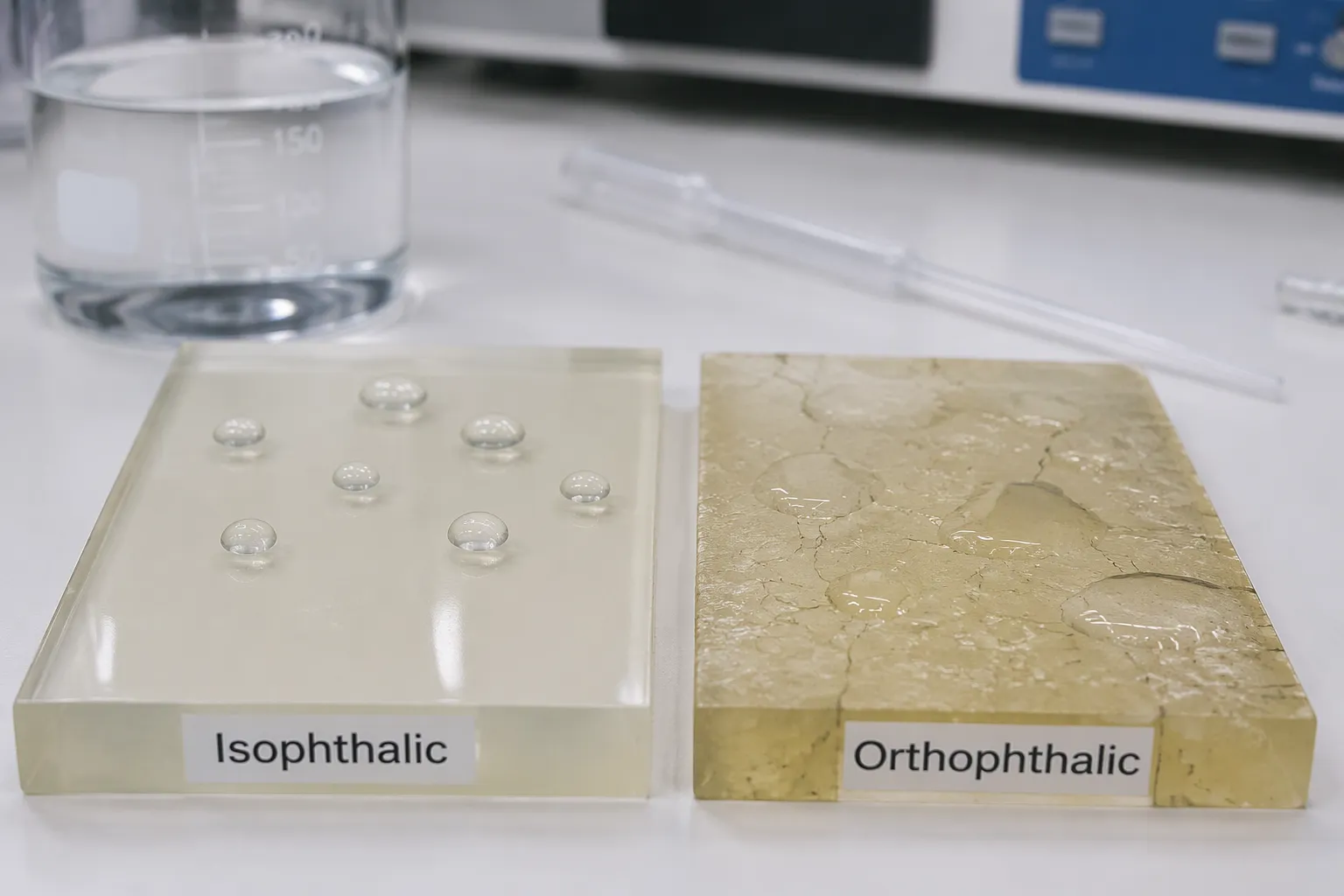
Two structural features set the chemistries apart. Isophthalic resin has a more compact, robust molecular backbone. That backbone includes more aromatic rings, which raise cross-link density in the cured network. Orthophthalic resin is made from orthophthalic acid and forms a less tightly cross-linked structure. The tighter network slows the penetration of water and chemicals. It also spreads mechanical stress more evenly through the cured part. Both effects extend service life in demanding environments. That difference shows up in the field, not just on a data sheet.
Corrosion and Hydrolysis Resistance
Water is the quiet enemy of polyester composites. Ester linkages in the polymer chain react with water in a process called hydrolysis. That reaction breaks the chain, softens the surface, and opens paths for deeper attack. Isophthalic resin resists this breakdown far better than orthophthalic resin. The compact structure leaves fewer weak spots for water molecules to reach.
Chemical resistance follows the same logic. The denser aromatic network blocks acids, bases, and solvents from diffusing into the resin. Temperature speeds up every diffusion process, so hot chemical service punishes a weak network quickly. The isophthalic chemistry also shrinks less during cure. Lower shrinkage means fewer micro-cracks at the surface, and micro-cracks are entry points for water.
Attribute | Isophthalic Polyester Resin | Orthophthalic Polyester Resin |
|---|---|---|
Chemical structure | Isophthalic acid reacted with diols; compact, robust, more aromatic rings | Orthophthalic acid reacted with diols |
Chemical resistance | Resists acids, bases, and solvents well | Lower than isophthalic |
Hydrolysis resistance | Strong water resistance; suits humid and marine service | More prone to hydrolysis |
Shrinkage | Shrinks less | — |
Cost | Higher | Lower; adequate for general-purpose work |
Surface protection is the first line of defense, and the gelcoat carries most of that burden. Isophthalic gelcoats absorb less water than older orthophthalic gelcoats. Lower absorption slows hydrolysis and blistering in wet or marine service. A hull or tank that blisters early loses both appearance and structural integrity. A slower absorption rate pushes that failure point years down the road.
Mechanical Strength and Durability
Strength data tells a similar story. In laboratory tests, a fiberglass reinforced isophthalic polyester resin panel showed 10% higher flexural and 20% higher tensile properties than a comparable orthophthalic panel. Those gains matter under sustained load, cyclic stress, and outdoor exposure.
POLYMER's Weatherproof Isophthalic Resin PLM-202 shows the performance ceiling. Typical cast properties include tensile strength of 70 MPa, flexural strength of 110 MPa, and heat deflection temperature of 80°C. The heat deflection figure matters for parts that sit in direct sun or near warm process equipment. A resin that holds stiffness at elevated temperature resists sag and creep.
Durability extends beyond a single pull test. Repeated wetting and drying cycles, thermal swings, and UV exposure all test the matrix over years. A stronger, tighter network resists micro-crack growth under those cycles. Cracks that do form propagate more slowly, so the part keeps its load-bearing capacity longer.
Balance matters here. On a dry test coupon pulled on the day it cured, the two chemistries are not dramatically far apart. Orthophthalic resin still offers a good strength, durability, and cost balance for general casting and lower-demand parts. The isophthalic advantage grows with exposure time, moisture, and chemical load.
Application Fit for Each Resin
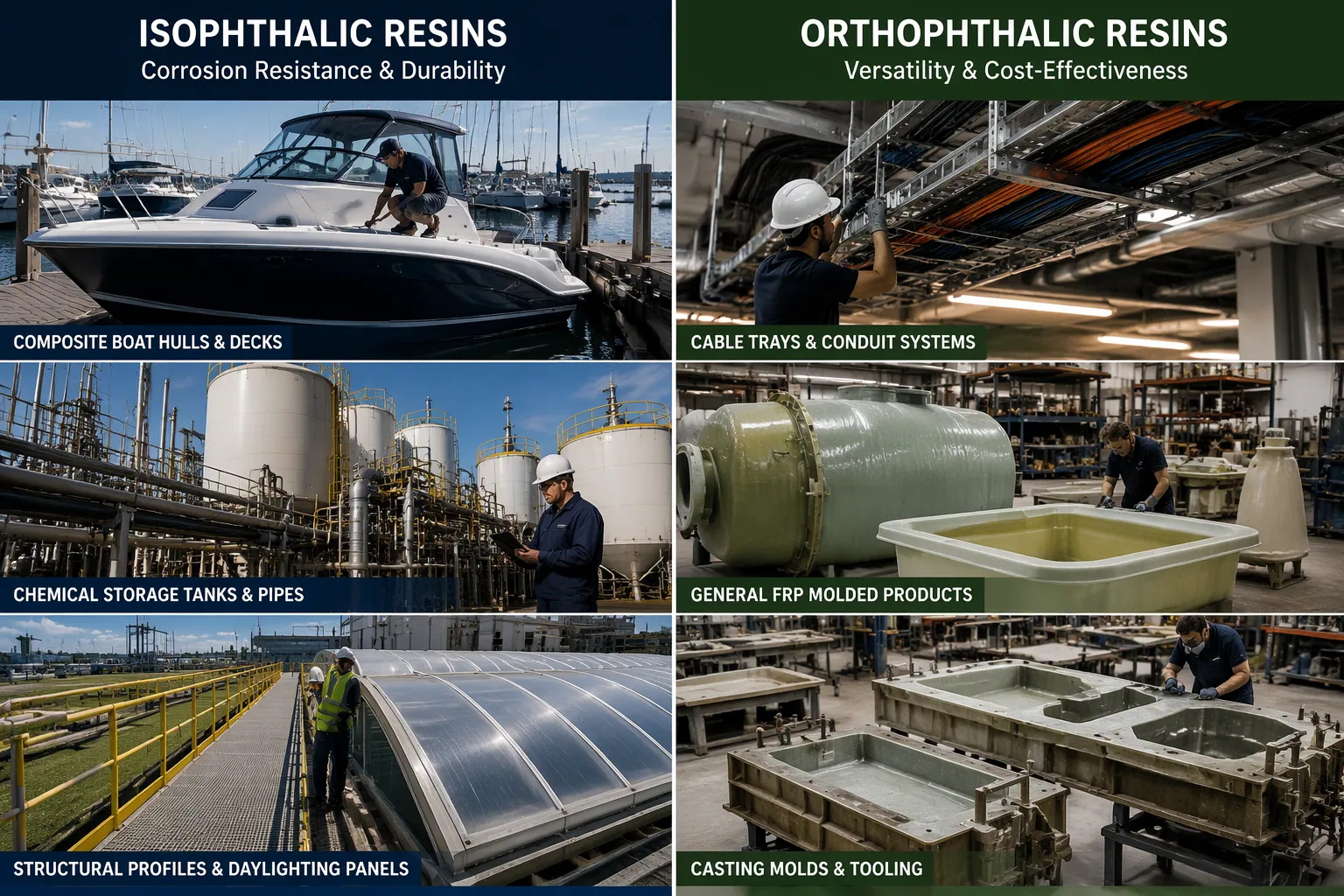
Picking a resin starts with where it will be used. Exposure, temperature, and how long it must last decide the match. Each chemistry has a clear place where it works best.
Best Fits for Isophthalic Resin
Isophthalic resin works well in wet, salty, and mildly harsh conditions. Marine hulls, decks, and cabins depend on its water resistance. Chemical plants use it for storage tanks, pipes, and process equipment in mild to moderate service. Outdoor profiles also gain from it, including PV mounting structures and city guardrails. Pultruded structural shapes and daylighting panels hold up well under weather and UV exposure.
Typical Parts | |
|---|---|
Marine and offshore | Hulls, decks, marine structures |
Chemical processing | Tanks, pipes, equipment in mild to moderate service |
Architectural and construction | Daylighting panels, outdoor elements |
High-performance composites | Pultrusion profiles, structural components |
Clean water storage is another good fit. Isophthalic polyester meets FDA food-contact rules and gives good water resistance at a fair cost. For chemical tanks, builders often pair a vinyl ester corrosion barrier with an isophthalic structural laminate. This two-part approach balances chemical resistance with structural strength.
Note: Isophthalic resin can be harder to use because it is thicker, but it lasts longer and is stronger.
POLYMER's Unsaturated Polyester Resin line covers orthophthalic, isophthalic, DCPD-modified, and vinyl ester grades. Buyers can match chemistry to the service environment without changing suppliers.
Where Orthophthalic Resin Fits Best
Orthophthalic resin fits general FRP products, casting molding, and indoor work where cost matters. Cable trays are a common example. They serve general industrial plants, indoor cable routing, commercial buildings, and light manufacturing facilities. Moderate chemical exposure and controlled environments suit this chemistry well.
Architectural applications also accept orthophthalic or isophthalic resin, depending on the exposure level. The choice comes down to matching resin to conditions, not picking one universal winner. A dry indoor part with moderate demands rarely needs the extra cost of a higher grade. A part facing salt spray, hot water, or chemical splash does.
Standards and Compliance
Standards That Favor Isophthalic Performance
Marine and industrial buyers rarely judge a resin on strength alone. Classification societies and food-contact regulators set the bar. Isophthalic systems clear that bar more easily. Marine classification approvals from groups like DNV and Lloyd's apply to resin grades used in hulls and offshore structures. Isophthalic chemistry meets those water-resistance expectations with less trouble than orthophthalic chemistry.
Food and potable water contact adds another layer. FDA-compliant food contact grades exist for both chemistries. Still, isophthalic polyester handles clean water storage with better long-term resistance. Buyers should confirm the specific grade carries the approval for the target medium, not just the resin family.
Supplier quality systems carry equal weight. ISO 9001 certification, steady batch-to-batch reproducibility, and technical service capability form the core of any serious evaluation. REACH registration and VOC-compliant formulations matter for European and North American projects. A supplier that documents these credentials lowers the risk of a failed audit late in a project.
Compliance for Orthophthalic Systems
Orthophthalic resin holds its own compliance position. ISO 9001 quality management, BIS certification, and domestic food contact and potable water tank approvals are available for orthophthalic grades. VOC-compliant and low-styrene formulations also exist, which suits projects with strict emission limits.
Compliance costs still apply to both chemistries. VOC emission control, wastewater treatment, and hazardous waste disposal add real expense to any molding operation. Buyers should budget for these items no matter which resin they choose.
Batch verification protects the whole supply chain. Chemical engineers test every batch to confirm consistent reactivity. Quality assurance teams track chemical polymerization limits before shipping resin overseas. This discipline prevents costly factory downtime and structural defects. A resin that meets a standard on paper still needs lot-level proof, and that proof belongs in the purchase agreement.
Cost: Upfront Price vs. Lifetime Value
Initial Material Cost
Orthophthalic resin usually costs less per kilogram when you buy it. That lower price works well for budget-focused projects with lower demands. A dry indoor part with moderate chemical exposure rarely needs a premium grade. Buyers who compare quotes side by side will see the orthophthalic option win on the first invoice.
The gap gets smaller once you look at the full picture. Isophthalic resin has a higher starting price, but that extra cost buys a denser, more stable polymer network. Procurement teams should treat the quote as one input, not the final answer. A resin that fails early wipes out its savings through rework, scrap, and emergency orders.
Lifetime Cost and Replacement Cycles
Durability drives the real cost equation. Isophthalic resins resist chemicals, water, and corrosion much better in marine and chemical service. Orthophthalic parts have moderate chemical resistance and may break down over time when exposed to harsh chemicals or moisture. They can also become brittle with age or exposure. Isophthalic products resist cracking, wear, and environmental stress, so they keep their properties longer.
That means fewer repairs, less downtime, and longer replacement cycles. A tank or pipe that lasts through extra service years avoids a second purchase, a second installation crew, and the production losses around a shutdown. When an application needs longevity and minimal maintenance, isophthalic resin may be the better choice on total cost, even at a higher entry price.
POLYMER strengthens this logic on the supply side. Batch-to-batch consistency from DCS-controlled production cuts trial-and-error runs. Customizable formulations match gel time and reactivity to the shop's process, which reduces rework. Technical support helps buyers select the right grade before the first drum ships. Those factors lower the hidden costs that never appear on a resin quote.
Isophthalic resin lasts longer, and its ability to stand up to water and chemicals is the reason. Performance comes first: a tighter polymer network keeps its strength and slows hydrolysis. Next is application fit, since marine, tank, and outdoor work benefits from that durability. Compliance matters too, because marine and food-contact approvals favor isophthalic chemistry. Lifetime cost settles it, as fewer repairs and longer replacement cycles make up for the higher starting price.
Orthophthalic resin still has its place. General FRP products, casting, and indoor parts where cost matters rarely need more.
Match the resin to the service environment. When a long service life is the priority, choose isophthalic, including POLYMER's Unsaturated Polyester Resin options.
FAQ
How can a buyer tell isophthalic and orthophthalic resin apart?
The data sheet names the acid used in the polymer backbone. Isophthalic grades list isophthalic acid. Orthophthalic grades list orthophthalic acid or phthalic anhydride. Buyers should also check the mechanical and chemical resistance figures. A denser aromatic structure shows up in higher strength values and better moisture resistance.
Does isophthalic resin work with standard molding processes?
Yes. Isophthalic resin works with hand lay-up, spray-up, filament winding, pultrusion, and resin transfer molding. POLYMER's PLM-202 grade is made for continuous high-speed pultrusion, with a viscosity range of 460–840 mPa·s at 25°C. Formulators adjust gel time and reactivity to fit each process, so shops rarely need new equipment.
Should the gelcoat match the laminate resin?
Matching the gelcoat to the laminate chemistry gives the best result. An isophthalic gelcoat takes in less water than older orthophthalic gelcoats. That pairing slows hydrolysis and blistering in wet or marine service. A surface layer that does not match can become the weak point that limits the whole part's service life.
How should buyers store unsaturated polyester resin?
Store resin in a cool, dry, well-ventilated area below 25°C. Keep drums away from direct sunlight and heat sources. Shelf life reaches 6 months under these conditions. POLYMER ships resin in 220KG iron drums or 1000KG IBC tanks, with packing designed to keep ocean freight safe.
When does orthophthalic resin make more sense?
Orthophthalic resin fits general FRP products, casting, and indoor parts with moderate chemical and water exposure. Its lower price per kilogram suits budget-driven projects. Buyers should weigh exposure, temperature, and required service life before paying more for a higher grade.