





Choose the Best Unsaturated Polyester Resin for Your Project

You see a wall of drums, each one promising good results. How do you choose the right unsaturated polyester resin for your project? The global market for this material hit USD 11.6 billion in 2024, so the choices keep growing. Here is the truth: no single resin is best for every job. The best choice fits your part's load, your workshop climate, and your budget. A general-purpose polyester resin might fail in a chemical tank. A high-performance UPR could waste money on a decorative panel. This guide walks you through project needs, resin types, key properties, processing methods, and cost. You will finish with a clear, confident decision.
Key Takeaways
Figure out what your project needs first. Think about the load, the environment, and how you will process it.
Pick the right resin type. Orthophthalic, isophthalic, DCPD, and vinyl ester each have different strengths.
Check the maker's quality control and support. Look for consistent batches and technical help.
Try a sample before you buy. A small test shows how the resin works in your shop.
Balance cost and performance. A higher upfront price can save money over time.
Define Your Project Requirements
Performance Needs and Environmental Conditions
Begin with the weight your part has to hold. A support beam, a chemical tank, or a boat hull requires strong mechanical strength. A decorative panel or a button needs a nice surface finish instead. Ask yourself one thing: will this part bear weight or look nice? Your answer shrinks the resin options quickly.
Now check the surroundings. Will the sun shine on the part every day? UV rays break down many general-purpose resins over time. Will the part touch acids, solvents, or saltwater? Contact with chemicals calls for a resin with proven chemical resistance. Changes in temperature matter too. A part that faces hot summers and cold winters needs a thermosetting resin that keeps its shape in that range. Marine parts, for instance, face saltwater, moisture, and UV all at once. That blend rules out cheap general-purpose UPR.
Curing and Processing Constraints
Your molding method sets firm limits on resin choice. Hand lay-up, spray-up, RTM, pultrusion, and filament winding each need different curing behavior. A pultrusion line runs fast and needs a highly reactive resin. Hand lay-up gives you more time, so a slower gel time works better. The curing mechanism also depends on your initiator system and workshop temperature.
Think about your workshop climate before you place an order. A resin that gels in twenty minutes at 25°C may gel much faster on a hot summer day. Your supplier can adjust promoter and inhibitor levels to fit your conditions. This step protects both workability and final durability. Match the resin to your process first, then fine-tune the formula. That order saves you from costly trial and error.
Types of Unsaturated Polyester Resin
Orthophthalic, Isophthalic, and DCPD Modified
The unsaturated polyester resin chemistry you pick shapes everything about your final part. Three main grades lead the market, and each one has a different job.
Orthophthalic resin is your budget-friendly workhorse. It gives good mechanical properties and decent chemical resistance. You will find it in large everyday parts where cost matters more than top performance. The processing window is strong, so it forgives small mixing or curing mistakes.
Isophthalic resin costs more, but it gives better chemical and corrosion resistance. This makes it the top pick for corrosion-resistant FRP products like chemical storage tanks and pipes. Under a 1.82 MPa load per ASTM D648, orthophthalic polyester shows a heat deflection temperature of 60–80°C. Isophthalic variants reach 95–120°C. That 20–40°C gap matters when your part faces heat.
DCPD-modified resin brings low shrinkage and better impact resistance. It fits large molds or parts where less shrinkage is critical. DCPD-modified UPRs also show lower exotherm than unmodified unsaturated polyesters. The trade-off is premium pricing due to higher raw material costs and complex synthesis.
Resin Type | Cost | Performance |
|---|---|---|
Orthophthalic | Cost-effective; most prevalent | Good mechanical properties and chemical resistance |
Isophthalic | Higher cost premium | Enhanced chemical and corrosion resistance; higher durability |
DCPD | Premium prices | Higher heat distortion resistance, better hydrolytic stability, increased toughness |
POLYMER offers all three types plus vinyl ester resins. Their customizable formulations let you tailor gel time and viscosity to your workshop conditions. They also provide eco-friendly formulations certified for domestic and international sales.
Vinyl Ester and Specialty Formulations
Vinyl ester resin sits at the top of the performance ladder. It provides superior chemical resistance and high-temperature endurance. You would choose it for extreme anti-corrosion applications in chemical plants or marine-grade UPR projects. The marine-grade version resists saltwater, humidity, and UV exposure over long service lives.
Specialty formulations address niche needs. Fire-retardant UPR adds safety for building panels and transportation parts. Artificial marble resins deliver high gloss and crack resistance for premium solid surfaces. Arts and crafts resins feature high transparency and yellowing resistance.
POLYMER's product range covers pultrusion, hand lay-up, filament winding, and molding processes. Each formulation targets specific industrial requirements. The durability of these polyester resins comes from rigorous lab testing and advanced DCS control systems. Every drum ships with a genuine Certificate of Analysis.
These grades give you a clear starting point. Your project requirements will point you toward the right one.
Compare Mechanical Strength and Chemical Resistance
Viscosity, Gel Time, and Reactivity
Viscosity controls how well your resin wets fiberglass. A thick resin traps air and leaves dry spots. A thin resin drips off vertical surfaces before it gels. Spray-up resins need a narrow range to avoid both problems. The table below shows typical viscosity ranges for spray-up grades that wet fiber well without sagging.
Product | Viscosity Range (cps) | Key Properties |
|---|---|---|
Polipol 3877 | 500–600 | Excellent fiber wet-out, No sagging on vertical surfaces |
Polipol 339 | 600–800 | Excellent fiber wet-out, No sagging on vertical surfaces |
Polipol 3401 (TA-H20/H40) | 500–700 | Quick and easy fiber wet-out, No sagging on vertical surfaces |
Polipol 3401 (TA-LSE-H20/H40) | 400–700 | Quick and easy fiber wet-out, No sagging on vertical surfaces |
Polipol 3404 (TA-H20/H40) | 550–650 | Quick and easy fiber wet-out, No sagging on vertical surfaces |
Polipol 3404 (TA-LSE-H20/H40) | 500–700 | Quick and easy fiber wet-out, No sagging on vertical surfaces |
Gel time sets how long you can work. A fast gel time speeds up production but shortens pot life. You might mix a batch and see it harden before you finish laying glass. A slow gel time gives you more minutes to work. It also keeps your mold busy longer. High reactivity improves mechanical strength and heat resistance. The trade-off is clear: faster cure means less time to place fiber and push out bubbles. Your supplier can change promoter and inhibitor levels to balance these forces for your shop.
POLYMER's Unsaturated Polyester Resin gives high mechanical strength and great chemical resistance. The formula also has low shrinkage for stable parts. A built-in color indicator lets you see when the resin is mixed well. That small feature helps fiberglass wetting and cuts waste.
Thermal Stability and Shrinkage Control
Heat and chemical resistance depend on the cured resin's crosslink density. A high-strength UPR resists bending under load and keeps its shape in hot conditions. Isophthalic and vinyl ester grades lead here. They protect parts that face acids, solvents, or steam. Lasting in these conditions extends service life and lowers maintenance costs.
Shrinkage control protects surface quality. Low-profile additives (LPAs) are key to getting high-gloss, smooth surfaces in composite manufacturing. NEULON LPAs are made to control shrinkage and create smooth Class A surfaces. Main benefits include great shrink control for even dimensions, smooth defect-free surfaces with high-gloss finish, work with unsaturated polyester and epoxy vinyl ester resins, and proven results in SMC, BMC, and pultrusion processes. They are used in automotive body panels, structural parts, and pultruded profiles to give surface stability, steady results, and top finish quality.
A thermosetting resin with low shrinkage keeps your mold dimensions tight. You avoid sink marks and warping on visible surfaces. This matters for artificial marble, auto panels, and any part where looks sell the product. POLYMER's polyester resin combines high mechanical strength with low shrinkage and great chemical resistance. The built-in color indicator further improves usability on the shop floor.
Choose the Right Unsaturated Polyester Resin Manufacturer
Evaluating Production Scale and Quality Consistency
A reliable unsaturated polyester resin maker gives you the same quality from drum to drum. You need every batch to cure the same way. One specialty polymer plant raised its Cpk from 1.12 to 1.78 — a 59% jump in batch consistency. Off-spec batches dropped by 79%. A coating resin maker saw its Cpk across six plants rise from 1.21 to 1.84. These numbers show what good process control can do.
A strong unsaturated polyester resin maker uses DCS control systems that watch viscosity in the line. Viscosity tells how the polymerization is going and how much the molecular weight has grown. Real-time data lets the plant fix problems as they happen instead of checking after production. Temperature control is also key; a change of just 1°C can shift viscosity by as much as 10%. This care gives you steady curing performance in every order.
POLYMER (POLYMER) is a top unsaturated polyester resin maker. Its technical sales team comes from China's best Double First-Class universities. As a vertically integrated unsaturated polyester resin maker, POLYMER controls quality from raw material to finished drum. Every batch ships with a real Certificate of Analysis.
Technical Support and Customization
Every workshop faces different weather and conditions. A good unsaturated polyester resin maker changes gel time and viscosity to fit your local needs. POLYMER offers custom modified resins for pultrusion, filament winding, hand lay-up, and artificial marble. Their team also helps fix mass production problems when they show up on your line.
You want an unsaturated polyester resin maker that gives you a one-stop supply chain. POLYMER brings you UPR, gel coats, curing agents, and fiberglass reinforcements from one source. Their global delivery process covers matching specs, adjusting formula, fast sampling, and mass production. You get a technical proposal within 12 hours and free test samples. Choosing the right unsaturated polyester resin maker becomes easy when technical depth and supply reliability come together.
Think About Processing Methods and Compatibility
Hand Lay-Up, Spray-Up, and Filament Winding
Your molding process decides which resin chemistry will really work in your shop. Hand lay-up and spray-up give you time to place fiberglass reinforcement by hand. These methods need a resin that stays in place on vertical surfaces. A high thixotropic index fixes this problem. The suggested thixotropic index for hand lay-up resin to stop drainage on vertical surfaces is 3-6. This range stops the resin from sagging while you work.
A thixotropic index of 3-6 stops sag on vertical surfaces during hand lay-up.
POLYMER's hand lay-up and spray-up resins come pre-promoted and thixotropic. The built-in color indicator shows you when mixing is done. Filament winding needs the opposite behavior. The resin must wet out continuous fiberglass strands quickly and cure fast under tension. POLYMER's filament winding grades give outstanding mechanical strength and chemical resistance for FRP pipes and tanks. Pultrusion runs even faster, so POLYMER offers a high-reactivity grade for high-speed profile production.
Matching Resin to Production Volume
Your production volume shapes the resin choice as much as your process does. Small batch work favors a slower gel time. You get more minutes to position fiberglass composites and remove air bubbles. High-volume lines need fast cure to keep molds turning. A thermosetting resin with high reactivity supports that pace.
POLYMER's artificial marble resins serve a different production model entirely. These grades give high gloss, crack resistance, and low shrinkage for premium solid surfaces. The low shrinkage protects mold dimensions across long runs. For fiberglass composite applications in construction and automotive, this consistency matters for durability and appearance. POLYMER also supplies molding resins with controllable thickening and excellent glass fiber wet-out. These polyester resins fit compression molding and other high-volume methods. Every grade ships with a Certificate of Analysis, so you can match the resin to your line speed and volume with confidence.
Evaluate Cost, Packaging, and Availability
Balancing Performance and Budget
A low price per pound can hide a bigger total cost. Buying straight from the maker cuts out distributor markups and gives you better value right away. POLYMER makes your resin in-house, so you pay the factory price. This way of sourcing saves money for composites manufacturing.
Look past the first number you see. A high-performance unsaturated polyester resin costs two to three times more than a general-purpose grade. It also cuts your defect rate by about fifty percent and makes molds last twenty percent longer. Fewer rejected parts and longer tool life change the lifecycle math in favor of the premium material. Your real cost per good part often drops when you pick a stronger resin.
Resin Type | Upfront Cost | Mold Durability | Defect Rate | Lifecycle Outcome |
|---|---|---|---|---|
High-performance UPR | 2–3x higher | +20% longer life | ~50% fewer defects | Lower total cost per part |
General-purpose UPR | Lower per pound | Baseline | Baseline | Higher total cost possible |
A trusted unsaturated polyester resin manufacturer like POLYMER helps you weigh this trade-off. Their technical team matches a formulation to your performance needs and budget limits. You get a solution that balances upfront spend with long-term savings.
Storage and Shipping Logistics
Your polyester resin arrives safely and stays usable for months when stored the right way. POLYMER packs its thermosetting resin in 220KG iron drums, with eighty drums per twenty-foot container, or in 1000KG IBC tanks. Each container seals for ocean freight to stop leakage or gelation during transit.
Keep your UPR in a cool, dry area below 25°C. The ideal range sits between 15°C and 25°C. A ten-degree rise above that cuts shelf life by almost half. Storage above 30°C risks pre-gelation. Under proper conditions, the resin keeps its durability for up to six months from production. Keep containers sealed and away from sunlight, heat sources, and ignition points. A well-ventilated storage area protects your material and your investment.
POLYMER ships from stock for fast delivery. Their global sourcing process moves from specification matching to formula adjustment, fast sampling, mass production, and global delivery. You receive a technical proposal within twelve hours and free test samples. This speed and reliability make POLYMER a preferred unsaturated polyester resin manufacturer for projects that cannot wait. You get consistent quality and secure logistics from one source.
Test and Validate Your Choice
Small-Scale Trials and Sampling
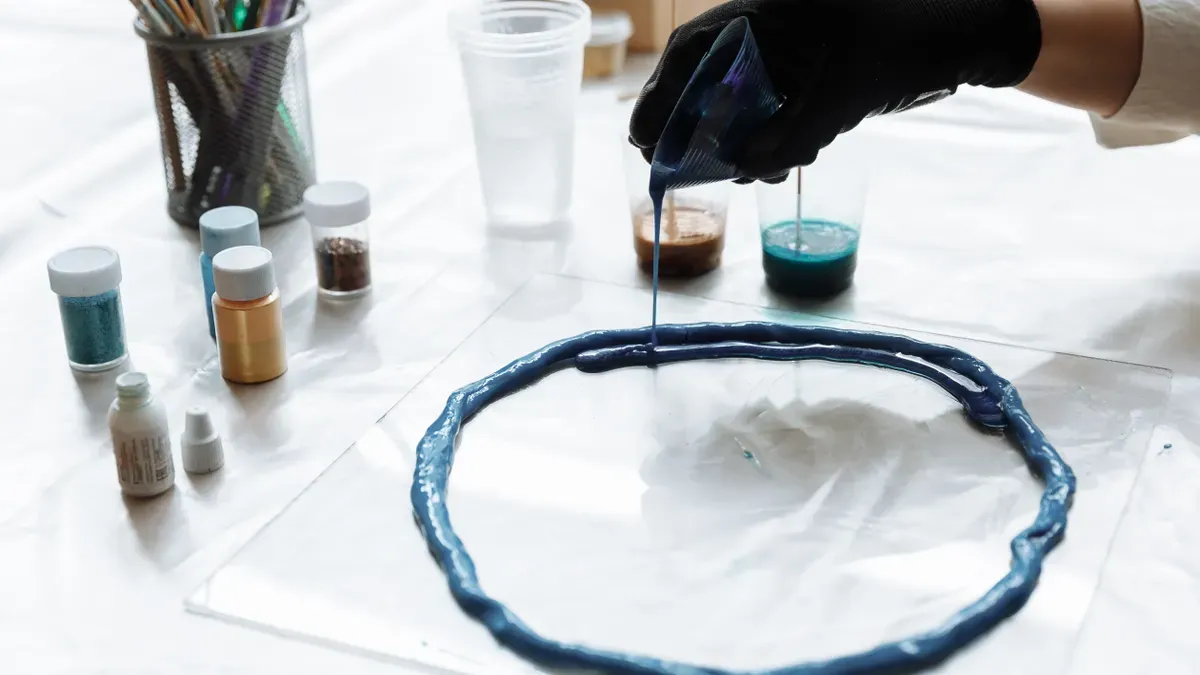
You have made your list of choices shorter. Now you need proof that the resin works in your shop. Ask for free test samples from makers like POLYMER before you place a full order. A small trial batch shows how the material acts in your real conditions. Mix the sample at your normal workshop temperature. Use your standard process to apply it. Watch how the resin wets out fiberglass and how it flows into mold corners.
POLYMER gives free test samples and a technical proposal within 12 hours. Their team helps you match the right grade to your application. You get a Certificate of Analysis with every batch. This paper confirms the resin meets its stated specs. A trial run with written results gives you confidence before mass production starts.
Key Metrics for Evaluation
Track three things during your test: cure time, surface finish, and mechanical strength. Cure time tells you if the gel window fits your workflow. A resin that cures too fast leaves no time to place reinforcement. One that cures too slow holds up your mold schedule. Surface finish shows whether the part meets visual standards. Check for bubbles, dry spots, and sink marks.
Strength testing follows established standards. ASTM D638-14 measures tensile properties of plastics using dumbbell-shaped specimens. ASTM C307-99 determines tensile strength of cured chemical-resistant materials. For chemical resistance, ASTM C581 evaluates thermoset resins in glass fiber reinforced structures. These tests give you hard data on durability and application performance. Compare your results against the Certificate of Analysis. Steady curing behavior across batches protects your production line. A validated UPR choice cuts waste and keeps your project on track.
You now hold a clear path for choosing the right unsaturated polyester resin. Define your project needs first. Then match resin chemistry, strength, and processing method to the job. Check the manufacturer's quality control, support, and delivery reach. Finally, test a sample before you commit.
Use this quick checklist:
Load and environment: strength, UV, chemicals, temperature
Process fit: gel time, viscosity, thixotropy
Resin type: orthophthalic, isophthalic, DCPD, vinyl ester
Supplier: batch consistency, technical help, pricing
Validation: trial batch, cure time, surface finish
Careful thought about your needs, the UPR properties, and your molding method leads to the best result. Request your free sample today. Your project deserves a resin that performs.
FAQ
How do I store my unsaturated polyester resin properly?
Keep your UPR in a cool, dry, and well-ventilated spot below 25°C. Store the containers away from sunlight and heat. In these conditions, your polyester resin lasts up to six months from when it was made. Sealed containers keep moisture out and stop pre-gelation.
Can I request a free sample before placing a bulk order?
Yes. POLYMER gives free test samples so you can check the thermosetting resin in your own workshop. Their team sends a technical proposal within 12 hours. You get a Certificate of Analysis with every batch. This helps you confirm cure time, surface finish, and strength before you commit to mass production.
Which resin type works best for chemical storage tanks?
Isophthalic and vinyl ester resins give better chemical and corrosion resistance. These grades protect tanks that face acids, solvents, or saltwater. Orthophthalic resin works for general FRP products instead. Match your UPR chemistry to the chemicals your tank will hold and the temperatures it will face.
What packaging options does POLYMER offer for international orders?
POLYMER ships its polyester resin in 220KG iron drums, with eighty drums per twenty-foot container. You can also order 1000KG IBC tanks. Each container seals for ocean freight to stop leakage or gelation during transit. Both options meet standard shipping rules for global delivery.
How does workshop temperature affect my resin's gel time?
Higher temperatures make gel time much shorter. A UPR that gels in twenty minutes at 25°C may cure much faster on a hot day. Your supplier can adjust promoter and inhibitor levels to match your local climate. This customization keeps your thermosetting resin workable in your shop conditions.