




How to Choose an SMC Resin Supplier?
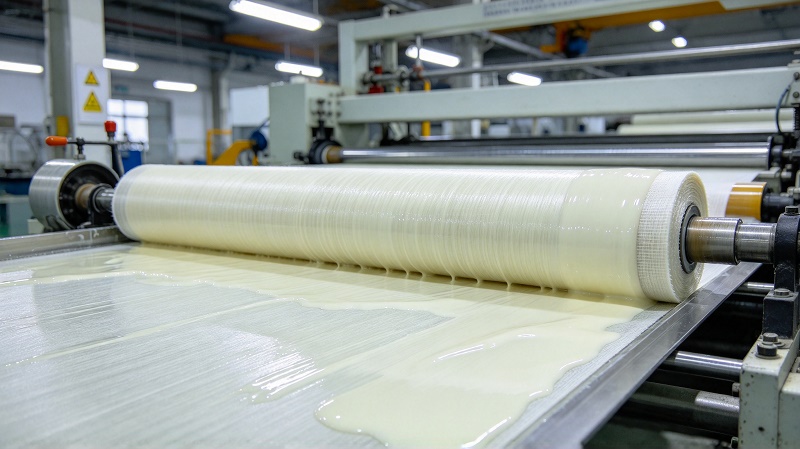
A bad supplier choice for your SMC resin will not stay hidden. It comes back as batch rejects, line stoppages, and rework costs long after you sign the contract. You need a checklist you can use before that signature.
Here are the seven factors this guide covers:
Material consistency and quality
Capacity and lead times
Technical support and formulation
Pricing and total cost
Quality proof and audits
Supply chain stability
After-sales service
Each factor below explains what to check and why it matters. You can take this list to a live supplier shortlist today and score every candidate against the same standard.
Key Takeaways
Check each batch for consistency and certificates to avoid production problems.
Check that the supplier has enough capacity and lead times to handle your busiest month.
Before you sign, test their technical support with a real formulation challenge.
Figure out the full cost of owning the resin over time, not just the price per unit, to save money.
Check how fast the service responds on every channel you use for quick help.
Factor 1: Material Consistency & SMC Resin Quality

Batch Consistency and COA Checks
Start with the paperwork. Ask for certificates of analysis from three different smc resin batches, then compare them side by side. Reactivity, viscosity, shrinkage, and filler content should stay close across all three. Big changes between batches mean the process is out of control downstream. Your press settings will drift, and your reject rate will go up.
A supplier that uses distributed control system (DCS) production records can show you the process parameters behind each batch, not just the final test result. Ask for those records. Also request the incoming PPM scrap history. This number shows how often the supplier's own customers rejected material at goods-in, and it is much harder to fake than a certificate.
Shelf-life and storage data need the same close look. Run a storage audit before you commit:
Store a sample of the resin and initiator at the facility's normal temperature and humidity for 4 weeks.
Re-test the decomposition onset using DSC (Differential Scanning Calorimetry).
If the onset temperature drops by more than 3°C, review storage conditions and packaging integrity as an audit finding.
Then check the declared storage window against documented warehouse conditions. Properly stored SMC rolls keep a usable shelf life of 4–8 weeks at 18–22°C. Records should show ambient temperatures at or below 25°C, relative humidity under 50% RH, no direct sunlight, and drums stacked no more than two high. A supplier who cannot produce these records is guessing about shelf life, and you will pay the cost of that guess.
Certifications That Matter
Certificates separate a marketing claim from a proven capability. Four matter most when you qualify an smc resin supplier:
ISO 9001 confirms a documented quality management system controls production, not just final inspection.
CE certification clears the product for European market entry and shows it meets regional health, safety, and environmental rules.
UL94 V-0 flame retardancy means the material puts out its own flame within 10 seconds in a vertical burn test. Automotive buyers need this for battery housings and under-hood parts. Electrical buyers need it for enclosures that sit near live components.
CTI ≥600V, rated Class PLC 0 under IEC 60664-1, prevents tracking arc failures in humid, polluted environments at Pollution Degree 3 or 4. Municipal and electrical buyers cannot compromise here, because a failed insulator means an outage and a liability claim.
Add testing capability to this same check. Ask for third-party lab reports for the grades you plan to buy, and audit the supplier's in-house QC lab during your site visit. Look at calibration records, sample retention, and whether the lab tests the same properties your application depends on.
POLYMER's SMC & BMC Compounds give you a clear benchmark for good documentation. The compounds are made under DCS control for batch-to-batch consistency, carry ISO and CE certification, and meet UL94 V-0 flame retardancy with a CTI above 600V backed by test reports. Compare your shortlist against that standard.
Factor 2: Capacity, Lead Times & Supply Chain
Verifying Capacity and On-Time Delivery
Compare the supplier's monthly tonnage capacity with your own forecast before you discuss price. Ask for the capacity number in writing, then check it against your busiest month, not your average. A supplier running near full capacity cannot handle your growth or a rush order. Request the on-time delivery (OTD) rate for the past twelve months, and ask how the supplier calculates it. A clear OTD number includes every shipment, even the late ones.
Buffer stock policy needs the same careful look. Ask how much finished compound the supplier keeps for repeat customers and how fast it can release that stock. Get the lead time in writing for a standard grade and for a custom formulation. Custom batches take longer, and your production plan must account for that gap.
Raw Material Sourcing and Supply Risk
SMC resin depends on styrene and glass fiber, and both carry supply risk. Map where the supplier buys each input and whether it has a second source for them. Geographic concentration is the danger. European buyers felt this directly in 2025, when EU sanctions on Russian chemical exports pushed input costs for European UPR manufacturers up 17%, with raw material shortages and input costs rising 15–20%. U.S. tariffs of 25% on European steel and aluminum derivatives in April 2025 added another layer of cost pressure across the Atlantic.
Risk Factor | Geographic / Logistics Dimension | Supply Risk Implication |
|---|---|---|
Low water levels on the Rhine | European petrochemical corridor (butadiene, propylene) | Added pressure on petrochemical flows; rail shifts raise delivered costs |
Crude reallocation to India | West Asian vs. Russian crude sourcing | Costlier replacement barrels and currency exposure |
Route and inventory planning | Multi-route freight and inventory coverage | Price alone is insufficient; evaluate feedstock, freight, route, and inventory jointly |
Export packaging protects the material in transit. Standard formats include 220KG iron drums, 1000KG IBC tanks, and PE-wrapped SMC rolls. POLYMER's one-stop supply chain and standardized export packaging reduce leakage and gelation risk in ocean freight, which gives you a working example of supply stability.
Factor 3: Technical Support & SMC Resin Formulation

Custom Formulation Capability
Your press and your building code set the real needs, not a generic datasheet. A strong supplier reads your whole RFQ and checks the part drawing, molding conditions, and performance targets before quoting. Those targets include electrical, flame-retardant, thermal, environmental, mechanical, shrinkage, surface, color, density, and certification specs. The supplier then matches an existing grade or decides if the formula needs changes.
Test this skill against five concrete checks:
Existing-grade matching: the supplier checks if a grade fits your part and its operating conditions. Then it recommends or adjusts a formula for that part instead of offering one generic grade.
Sample preparation and material testing: the supplier prepares samples and treats the first technical datasheet as a formula reference only. Final performance must be confirmed through material testing.
Molding trials: the supplier validates production suitability by running trials with your actual mold, press, and processing parameters. It follows the trials and shares technical feedback during material adjustment.
Manufacturing partner coordination: the supplier works with qualified manufacturing partners to support formula adjustment and trial feedback.
Third-party testing and certification: the supplier checks which documents are available, such as supplier lab data, third-party reports, raw-material recognition, finished-product certification, and factory certification. It also identifies which extra tests are required.
Ask specifically how the supplier tunes shrinkage rate, curing speed, flame-retardant level, color, and flowability to match your press and your regional building codes. A supplier who answers in general terms cannot support you when a batch drifts.
Pre-Commitment Technical Response
Run a live test before you sign anything. Submit a real formulation challenge from your production line, not a hypothetical question. Give the supplier your part drawing, current defect, and target performance. Then measure two things: how fast the answer arrives and how deep it goes.
A shallow reply restates the datasheet. A deep reply names the likely cause, proposes a specific adjustment to the smc resin formulation, and explains how the change affects your molding window. It may also ask for a sample or a trial run, which shows the supplier treats the datasheet as a starting point rather than a final answer.
POLYMER's technical sales team, drawn from China's top Double First-Class universities, gives you a working example of this standard. The team provides customized formulations and mass-production troubleshooting, so you can compare response depth across your shortlist against a known benchmark. Score each candidate on response time, technical specificity, and willingness to run a trial with your mold. A supplier who passes this test before the contract is far more likely to solve problems after it.
Factor 4: Pricing, Testing & After-Sales Service
Pricing Transparency and TCO
Unit price alone does not tell you much. Build a total cost of ownership (TCO) model before you compare quotes. Add freight, minimum order quantity (MOQ) penalties, and payment terms to the landed cost. Then add the costly part: rework cost and defect-rate impact. A cheap resin that raises your reject rate even a little costs more than a premium grade that runs clean.
Ask each supplier to break the quote into material, packaging, freight, and payment terms. A supplier who hides cost lines in one number cannot support a fair comparison. Calculate TCO as landed cost plus rework cost plus scrap cost, then divide by good units produced. The lowest TCO wins, not the lowest unit price.
QC Audits and Service Responsiveness
Request recent third-party audit reports before you shortlist anyone. Read the findings, not just the certificate. Then review the supplier's incoming inspection protocol: what it tests, how often, and what happens when a batch fails. A supplier with a documented rejection and quarantine process protects your line.
Test service responsiveness with a live message on each channel you will actually use. Send the same question by email, WhatsApp, and phone. Track reply time and answer quality across all three. Then ask how the supplier handles mass-production troubleshooting after delivery. Strong after-sales support means a named contact, a defined response window, and a willingness to visit your plant when a problem repeats.
POLYMER sets a useful benchmark here. The company offers OEM/ODM services, free test samples, and multi-channel support through email, WhatsApp, and direct phone. Score your shortlist against that standard, and award the contract only to a supplier who answers on every channel you depend on.
You now have a full plan: material consistency, capacity and lead times, technical support and formulation, pricing and total cost, quality proof and audits, supply chain stability, and after-sales service. Each factor connects to a real buying risk — batch consistency, delivery, technical fit, cost, quality proof, supply stability, and service. Score every candidate on all seven before you make a shortlist.
Then take one real step before you give out any contract:
Ask your top two or three suppliers for production samples with certificates of analysis.
Ask each one for a recent third-party audit report.
Test the samples on your own press and compare the results.
A supplier who gives you clean paperwork and clean material at this stage will protect your line later.
FAQ
How do I check that an SMC resin supplier's certifications are real?
Ask for the certificate number and the name of the group that issued it. Then look up both in that group's public registry. Ask for the scope statement, not just a picture of the certificate. Make sure the certified grade is the same one you plan to buy. If a supplier stalls on any of these steps, they may have something to hide.
Can I get free samples before I place a bulk order?
Many trusted suppliers give free test samples, and POLYMER does. Ask for samples of the exact grade you plan to run, plus the matching certificate of analysis. Test them on your own press using your normal molding settings. How a sample runs on your equipment tells you more than any datasheet.
What is the minimum order quantity for SMC resin?
MOQ depends on the supplier and the grade. Custom formulas usually have a higher MOQ than standard grades. Ask for the MOQ in writing along with the unit price. Then add any MOQ penalty into your total cost of ownership model. A low unit price with a harsh MOQ often loses on total cost.
How should I store SMC resin, and how long does it last?
Store SMC rolls at 18–22°C, keep the room temperature at or below 25°C, and hold relative humidity under 50% RH. Keep the material out of direct sunlight. Stack drums no more than two high. Properly stored SMC rolls keep a usable shelf life of 4–8 weeks; SMC and BMC compounds usually last 3–6 months.
What packaging should I expect for export shipments?
Standard export formats include 220KG iron drums, 1000KG IBC tanks, and PE-wrapped SMC rolls in wooden boxes. Ask how the supplier guards against leakage and styrene evaporation during ocean freight. Standardized packaging lowers gelation risk and protects your material through long transit routes.