





What Is SMC Plastic Material and What Key Properties Make It Durable?
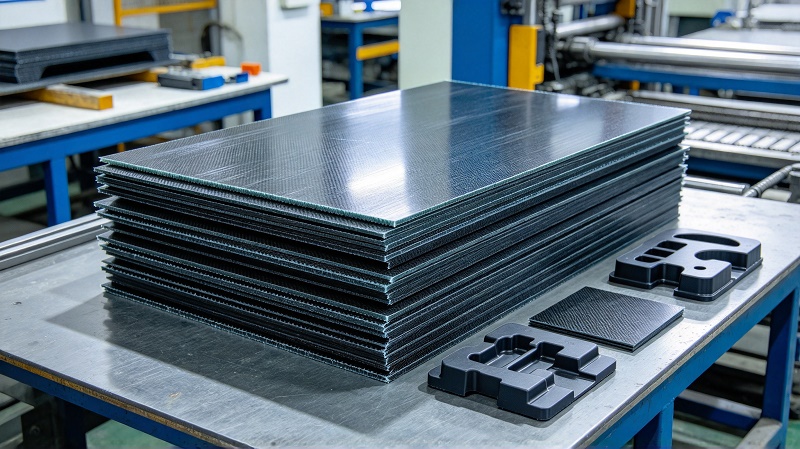
SMC plastic material is a sheet molding compound. It is made from chopped glass fibers, resin, fillers, and additives molded under heat and pressure. This thermoset composite must resist impact, corrosion, heat, and weather for decades in harsh environments. SMC plastic parts are used in electrical enclosures, car panels, and infrastructure components. Their durability controls safety, maintenance costs, and service life. Sheet molding composite provides high mechanical strength and dimensional stability. The material also resists chemicals, water, and ultraviolet radiation. These properties make SMC a dependable choice for long-term outdoor and industrial use. Engineers value this sheet molding compound because it balances performance and cost efficiency. The next sections explain what SMC is, how makers produce it, which properties give durability, and where industries use it.
Key Takeaways
SMC plastic lasts for many years outside because it stands up to impact, chemicals, heat, and UV rays.
SMC parts are tough but light, so they work well for cars, electrical boxes, and buildings.
The manufacturing process can make complex shapes in one step, saving both time and money.
SMC beats steel, aluminum, and fiberglass in corrosion resistance and design flexibility.
SMC is safer for electrical use because it resists flames and insulates well.
What Is SMC Plastic Material?
Definition and Full Form
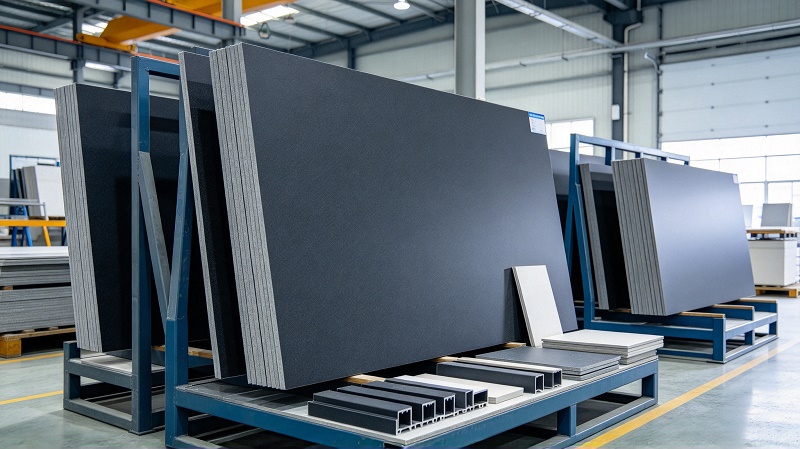
SMC stands for Sheet Molding Compound. This smc plastic material is a fiber-reinforced thermoset composite. Manufacturers mix resin, glass fiber, and minerals into a sheet that can be molded. Heat and pressure then shape the sheet into strong parts.
The word "thermoset" tells how the material acts when heated. Thermoset materials cure for good. After shaping, they cannot melt and flow again. This is different from thermoplastics, which get soft when heated again.
Melt processing techniques cannot be applied to thermoset polymers, since thermoset polymers comprise a three-dimensional network of covalent bonds so that they are unable to melt and flow.
During curing, reactive groups in the resin form covalent bonds with each other. These bonds build bridges between polymer chains. The resin begins as a thin liquid that flows into molds. As the reaction goes on, it thickens and turns into a gel. More curing turns the gel into a hard solid with final mechanical properties. This process gives SMC composite its lasting strength and heat resistance.
Composition and Key Characteristics
The smc raw material composition has four main parts. Each one shapes how the sheet molding compound performs in the end.
Chopped glass fiber gives mechanical reinforcement. Fiber length and content decide tensile strength and impact resistance. Unsaturated polyester resin holds the fibers together and forms the continuous matrix. Fillers like calcium carbonate lower cost and control shrinkage. Additives include curing agents, color pastes, and low-shrink agents. These additives adjust the smc manufacturing process and final properties.
POLYMER offers SMC & BMC Compounds as a ready-to-mold thermoset composite. Engineers created these compounds with Double First-Class university engineering expertise. The formulation supports steady quality and reliable molding.
Several key traits define quality smc material. Low shrinkage keeps part sizes accurate. High insulation shields electrical components from current leakage. Corrosion resistance makes service life longer in harsh environments. Flame retardancy meets safety standards for electrical enclosures. Customizable flowability lets the smc compound fill complex molds without defects.
These traits make sheet molding compound a top choice for demanding applications. The material handles heat, chemicals, and weather without losing structural integrity. Designers get freedom to create intricate shapes in a single molding cycle. Manufacturers get repeatable results at high production volumes.
How the Sheet Molding Compound Process Works
Mixing, Sheet Formation, and Maturation
The smc manufacturing process starts with making a resin paste. Unsaturated polyester resin is mixed with fillers, thickeners, catalysts, and mold release agents. This mixing happens at 40–60°C until the mixture becomes smooth and even. Then glass roving goes through a chopper that cuts fibers into 25–50 mm lengths.
A polyethylene carrier film moves under a dispenser that puts down a controlled resin layer. This layer measures 0.5–1.5 mm thick. Chopped glass fiber falls evenly onto this paste at 20–30% by weight. A second resin layer and film cover the fibers. Then compression rollers knead the assembly to wet the fibers and remove air bubbles. The finished sheet molding compound ends up 3–6 mm thick.
After that, the sheet goes through maturation. Workers wind the material into rolls and store them at 15–25°C for 24–72 hours. During this time, thickeners react with the resin and raise viscosity to the level needed for molding. The sheet molding compound process gives a shelf life of about 60 days in winter, 30 days in spring/autumn, and 20 days in summer.
Compression Molding into Durable Parts
The compression molding process turns matured sheet into finished parts. Operators place a weighed charge into a heated mold. Mold temperatures usually range from 100–150°C for polyester and fiberglass systems. The press closes and applies pressure of several tens of bar. The sheet flows outward to fill ribs, bosses, and complex features. Cure time runs 2–5 minutes.
POLYMER adjusts flowability, gel time, shrinkage rate, and fiberglass content to match customer tooling. The company's SMC & BMC Compounds support both compression and injection molding with optimized flow characteristics. Manufacturers can also add fasteners and metal inserts right into the mold during forming. This approach removes secondary assembly steps and lowers total production costs.
Key Material Properties That Make SMC Durable
The durability of SMC plastic material is based on solid test results. Tensile strength, dimensional stability, chemical resistance, flame retardancy, and electrical insulation control how long a part lasts in use. Each property has a standard test method that engineers use to compare grades.
Mechanical Strength and Impact Resistance
POLYMER's sheet molding compound for enclosures has tensile strength up to 70 MPa. Strong impact resistance lets the material take hits from tools, debris, or vehicle contact without cracking. Large vertical panels use high-flex SMC grades so they do not sag under their own weight. The molded part's rigidity keeps flat surfaces straight across wide spans. This stiffness also holds mounting bosses and fastener inserts firmly in place.
Dimensional stability adds to the durability story. A zero-warp, ultra-low-shrinkage formulation keeps part sizes accurate from the first batch to the last. Under constant load and heat up to 260°C, the material remains stable. That heat tolerance stops creep in hot transformer cabinets or engine compartments.
To check these claims, labs use standard test methods. ASTM D638 measures tensile behavior. ASTM D790 checks how reinforced plastics bend. ASTM D256 tests Izod pendulum impact resistance. The table below lists the most common methods for SMC parts.
Property Category | ASTM Test Method | Description |
|---|---|---|
Tensile | ASTM D638 | Tensile properties of plastics |
Flexural | ASTM D790 | Flexural properties of reinforced plastics and electrical insulating materials |
Impact | ASTM D256 | Izod pendulum impact resistance of plastics |
Dielectric Breakdown | ASTM D149 | Dielectric breakdown voltage of solid insulating materials at commercial power frequencies |
Comparative Tracking Index | ASTM D3638 | Comparative Tracking Index of electrical insulating materials |
Corrosion, Water, and Chemical Resistance
SMC parts stand up to acids, alkalis, salt spray, and ultraviolet radiation outdoors. The SMC material resists all of these. A dense structure with no pores keeps water from soaking into the surface. This gives the part excellent water resistance. That resistance stops freeze-thaw damage and prevents internal fiber breakdown. ASTM D570 measures water absorption to confirm the dense structure.
The SMC composite can handle -50°C to 160°C without cracking or softening. Weather resistance extends service life to 20–40 years outdoors. City manhole covers, 5G radomes, and electrical meter boxes depend on this long-term stability.
The SMC compound meets UL94 V-0 flammability standards. Its oxygen index is at least 35%, so the material puts out its own fire when the flame source leaves. Burning does not release toxic gases. This matters for enclosed utility vaults and tunnels.
Electrical behavior finishes the durability picture. POLYMER's flame-retardant grade has a Comparative Tracking Index above 600V. Dielectric breakdown reaches 20 KV/mm or more, far above the need for low-voltage enclosures. Anti-static options stop dangerous discharge in explosive places like gas station maintenance wells. For CTI measurement, labs use ASTM D3638.
Note 1: There is no known ISO equivalent to this standard.
One warning applies to every standard. A UL94 V-0 rating describes the test specimen, not the whole product assembly. Dielectric breakdown values are a withstand voltage under a set procedure and time, not a steady operating voltage. These metrics guide design, but final product safety depends on proper creepage distances, pollution degree, and enclosure design.
Benefits and Uses of SMC Material
Lightweight Design, Design Flexibility, and Cost Efficiency
In many structural jobs, SMC material replaces steel and aluminum. It weighs less but still has the strength for load-bearing parts. So SMC plastic is a smart choice for light, durable parts in vehicles, buildings, and utility gear.
Designers have wide freedom with Sheet Molding Compound. They can adjust hardness, color, and flowability to match each job. Complex shapes form in one molding step, so makers skip welding and secondary assembly. This cuts time and labor for every unit.
High-volume production brings the real cost advantage. SMC cures quickly, leaves the mold easily, and cuts cycle times. POLYMER sells SMC & BMC Compounds factory-direct, so buyers skip middleman markups. The company also changes its formulas to fit customer tooling and process needs.
Common Uses Across Industries
SMC composite works in many industries because it handles harsh conditions well. The table below gives typical uses by industry.
Sector | Typical SMC Applications |
|---|---|
Power | Insulation and support for high-voltage switchgear, transformers, bus ducts, and similar equipment |
Automotive | Car bodies, front and rear bumpers, instrument panels |
Construction | Roof solar panels, soundproof panels (waterproof, anti-corrosion, flame-retardant) |
Electrical & Telecom | Electrical enclosures, switch boxes, wiring boxes, instrument panel covers, insulators, insulation tools, motor end caps |
Marine | Cabin interior decoration, engine compartment partitions, bridges, ship hulls |
Industrial / Anti-corrosion | Machine manufacturing (power tools, agricultural machinery, panels); corrosion resistance against acid, alkali, and salt |
SMC is widely used in industries that need reliable performance, including automotive components, electrical equipment, industrial products, and increasingly in bathroom construction.
SMC's water resistance and easy-to-clean surface make bathroom wall panels and shower wall panels better. Cars use SMC for bumpers and battery housings. POLYMER's Power & Telecommunications Application Solutions support 5G antenna radomes and cable protection pipes. Flame-retardant grades PLM-6001, PLM-5510, and PLM-5512 fit electrical enclosures needing high insulation and safety.
SMC Compared with Other Materials
SMC vs. Steel, Aluminum, and Fiberglass
SMC is lighter than steel or aluminum and resists rust and corrosion better. It also gives designers more freedom to shape parts. Its density is 1.78 to 1.85 g/cm³. Steel is about 7.86 g/cm³, and aluminum is about 2.70 g/cm³. So SMC weighs about 40% less than aluminum and about 60% less than steel for the same shapes. Steel rusts if it has no protective coating. Aluminum breaks down over time. After 1,000 hours in saltwater, SMC shows no rust or oxidation.
Hand layup fiberglass relies on people doing the work by hand. Wall thickness, fiber spread, and resin amounts change from one part to the next. That method has a defect rate near 3%. Automated SMC molding keeps its defect rate near 0.5%. In crash tests, SMC also takes in about 30% more energy than fiberglass. Fiberglass may still be best when you need the most strength at the lowest weight. But its hand labor makes each part cost more as you make more of them. For high-volume production, SMC gives a better strength-to-weight ratio.
SMC vs. BMC
SMC and BMC use the same resin system, but their fiber lengths are not the same. SMC uses longer fibers, about 1 inch. BMC uses shorter fibers, under 0.25 inch. This gap affects mechanical strength and part shape. SMC gives higher tensile and flexural strength along the fiber direction. BMC gives moderate strength and acts more evenly in all directions.
The two materials also use different molding methods. Workers mainly shape SMC by compression molding. They put cut sheet charges into a heated mold, then press and cure them. This works well for large, strong parts that hold their shape, like auto body panels and enclosures. BMC flows easily, so it fits small, detailed parts made by injection molding. These smc and bmc molding advantages help pick the right material. SMC wins on stiffness and surface finish for big structural panels. BMC wins on detail and cycle speed for connectors and switchgear components. SMC's mix of strength, finish, stability, and production speed is hard to beat.
SMC plastic material remains a high-performance composite material because it combines mechanical strength, impact resistance, corrosion resistance, dimensional stability, and flame retardancy. These properties allow molded parts to survive decades of outdoor exposure. Market data confirms this preference. Analysts project the global sheet molding compound market will grow from USD 4.6 billion in 2026 to USD 7.4 billion by 2033, a 7.0% CAGR. Building and construction leads the expansion at 8.1%.
Manufacturers gain long-lasting performance from SMC material, with design freedom and cost efficiency in high-volume production. Suppliers like POLYMER support this value. Accelerating infrastructure modernization continues to make SMC a preferred composite for demanding electrical, automotive, and infrastructure applications.
FAQ
How long does SMC plastic material last outdoors?
A sheet molding composite part can stay outdoors for 20 to 40 years. The material fights off UV rays, salt spray, and temperature changes from -50°C to 160°C. This long service life cuts down on replacement and maintenance costs for infrastructure owners.
What makes SMC composite safe for electrical enclosures?
The material meets UL94 V-0 flame retardancy standards and has an oxygen index of at least 35%. Its Comparative Tracking Index is over 600V, and dielectric strength hits 20 KV/mm or more. These traits stop leakage and keep fires from spreading.
How should buyers store Sheet Molding Compound?
Keep the compound in a cool, dry spot at 25°C. Wrap it tightly in PE film to block styrene from evaporating. Under these conditions, the standard shelf life is about 60 days in winter, 30 days in spring/autumn, and 20 days in summer.
When should a project choose SMC over BMC?
SMC works best for big, complex structural parts like auto body panels and enclosures. BMC fits smaller, detailed parts made by injection molding. Both materials use the same resin system, but fiber length and molding method are different.
Can manufacturers customize smc properties for specific tooling?
Yes. Suppliers tweak flowability, gel time, shrinkage rate, and fiberglass content to fit customer molds. This tuning makes sure of proper fill, fast curing, and steady part quality across production runs.