




SMC Resin Price vs. Total Cost: What Procurement Managers Often Miss
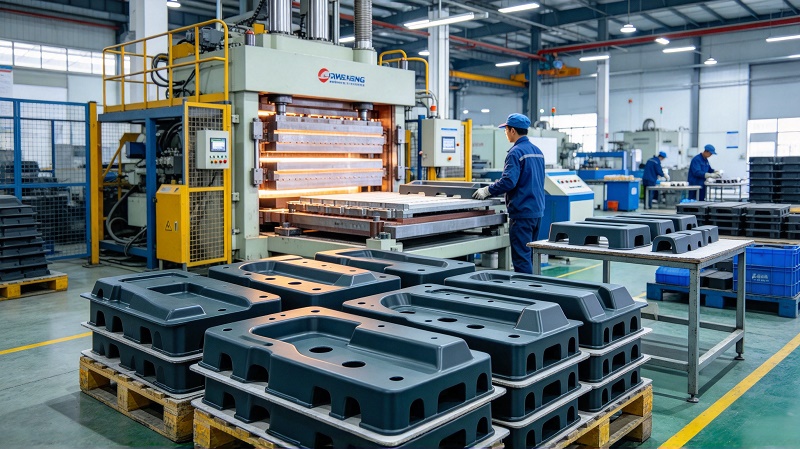
The lowest quoted SMC resin price often leads to the highest total cost. Resin is usually the biggest cost in SMC production, but price is only one part of the cost picture. A few cents saved per kilogram can disappear once scrap, rework, and downtime are added in.
So if you cannot trust the unit price, what should you compare? That question is at the heart of SMC Resin Price vs. Total Cost. This post shows the hidden costs behind cheap quotes and gives you a practical framework for comparing suppliers on total cost, not sticker price.
Key Takeaways
Unit price is only the start. The lowest quote can cost more once you add scrap, downtime, and mold wear.
Hidden costs like scrap, rework, and downtime can make your real cost twice as high. Always figure out the total cost of ownership.
Use a total cost checklist to compare suppliers. Include freight, scrap, mold maintenance, and downtime in your comparison.
Think again about how you grade your suppliers. Focus on quality, dependability, and design skills, not only cost.
Ask suppliers for guarantees on yield and data on mold life. Check performance with free test samples before you commit.
SMC Resin Price vs. Total Cost: The Real Gap

What the Quote Sheet Shows
A quote sheet gives you one clean number: the unit price per kilogram of SMC resin. That number matters. Resin is often the largest single line item in SMC production, so a small change in price per kilogram can shift your whole budget. That is why buyers watch it closely.
But the unit price is a starting point, not the full story. The real gap sits between quoted unit price and total cost of ownership. Unit price tells you what you pay at the dock. Total cost of ownership tells you what you really spend to turn that resin into sellable parts, from delivery through molding, finishing, and warranty. The two numbers rarely match.
What the Quote Sheet Hides
Here is the price trap. The cheapest quote often costs the most across the full procurement cycle. A low sticker price can hide higher landed cost once you add freight, duties, and site delivery. It can hide a grade that runs slower in your press or makes more scrap. It can hide a supplier whose lead times force you to carry extra inventory as a buffer.
Landed cost varies by grade, supplier, and site. Two suppliers may quote the same resin grade at different prices, yet the delivered cost to your plant flips once freight and handling enter the picture. A supplier far from your site may win on paper and lose on delivery. A nearby supplier may quote higher and still cost less overall.
This is where SMC Resin Price vs. Total Cost becomes a practical question, not a theoretical one. You cannot compare suppliers on the quote sheet alone. You need to compare what each option costs you after the resin arrives. That comparison is the base of every sourcing decision that follows.
POLYMER approaches this gap with steady quality and customized formulations. Stable compound properties cut down on the surprises that raise total cost later. Free test samples let you check performance in your own process before you commit. That step alone closes much of the gap between the quote and the real bill.
Hidden Costs Behind the Price
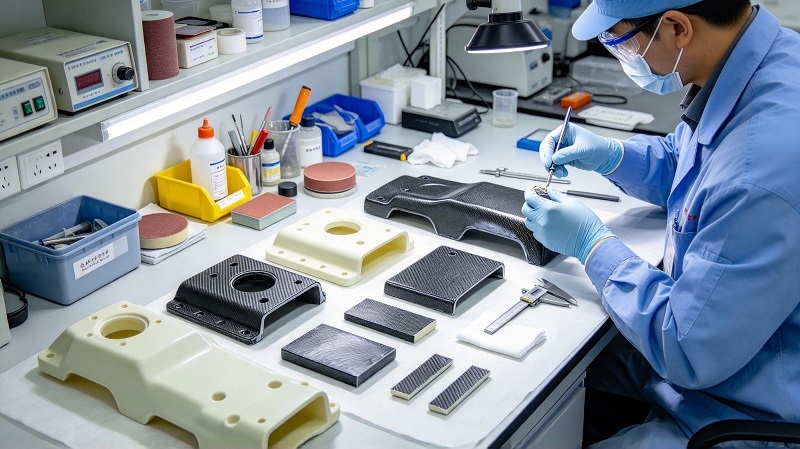
Many procurement managers treat the unit price as the decision. That habit is the most expensive one in SMC sourcing. The quote sheet captures one number and ignores the costs that pile up after delivery. Yield rate, mold life, and scrap rate all change total cost, and none of them show up on the quote. Understanding SMC Resin Price vs. Total Cost means looking past the sticker and into the plant.
Quality Losses and Scrap Rates
Yield rate measures how many good parts come out of every hundred you mold. Scrap rate measures the rejects. Rework covers the parts you save through extra labor. A resin that molds unevenly raises all three, and the cost lands on your production floor, not the supplier's invoice.
Class A Surface SMC automotive parts show this clearly. Exterior panels demand a mirror-smooth, paint-ready finish. Surface defects such as porosity, ripples, or fiber read-through send parts straight to scrap or back through sanding and rework. The 2012 Mercedes SL molded SMC decklid shows how big the problem can be.
Part / Context | Scrap Rate | Stage |
|---|---|---|
2012 Mercedes SL molded SMC decklid | ~35% | Initial (before improvements) |
2012 Mercedes SL molded SMC decklid | <5% | After process/data-management improvements |
That gap between 35% and under 5% is pure cost. Every scrapped decklid uses up resin, labor, press time, and energy with nothing to sell at the end. Consistent compound quality is the lever that closes it. POLYMER's SMC & BMC Compounds deliver low shrinkage for dimensional stability and a smooth surface, UL94 V-0 flame retardancy, and CTI above 600V insulation. Stable properties mean fewer surface defects, higher yield, and less rework on every run.
Processing and Supply Chain Penalties
Resin choice also shapes your tooling and your schedule. A compound that cures slowly or flows poorly shortens mold life through extra heat cycles and stress. It stretches cycle time and drags down output per shift. Lead time matters too. A long or unreliable lead time forces you to hold safety stock, and that inventory ties up cash.
Supplier reliability sits behind all of these. A supplier who misses delivery dates stops your line, and downtime costs far more than any per-kilogram saving. Raw material price volatility adds another layer. Resin prices move with feedstock markets, and a supplier who cannot hold pricing stable pushes that risk onto your budget.
POLYMER addresses these penalties through consistent quality and customized formulations. The technical team tunes flow and shrinkage to match your tooling, which protects mold life and cycle time. Free test samples let you validate performance before you commit. That validation turns a hidden cost into a known one, and known costs are the only ones you can manage.
Building a Total Cost Comparison
Cost Factors to Quantify
A total cost model turns scattered costs into one number you can compare. Start with the factors you can measure directly. Unit price sets the baseline. Freight and landed cost add delivery, duties, and handling to your site. Expected scrap and rework capture the resin you pay for but cannot sell. Mold maintenance covers the wear each compound puts on your tooling. Downtime assigns a cost to every hour your line sits idle. A risk buffer accounts for lead time variance and price volatility.
Cost Factor | What It Captures |
|---|---|
Unit price | Quoted cost per kilogram |
Freight and landed cost | Delivery, duties, handling to your site |
Expected scrap and rework | Resin, labor, and press time lost to rejects |
Mold maintenance | Tooling wear and repair cycles |
Downtime | Cost of idle line hours |
Risk buffer | Lead time variance and price volatility |
A Side-by-Side Method
Pick two or three suppliers and score each one against the same factors. Use your own plant data where you have it. For scrap, run a trial batch and count good parts against total parts. For downtime, track stoppages tied to each compound. Then place the results in one table, one column per supplier.
The method works because it forces an apples-to-apples view. A supplier with the lowest unit price may lose on scrap and downtime. A supplier with a higher quote may win once mold life and reliability enter the score. This is the practical side of SMC Resin Price vs. Total Cost: you compare outcomes, not stickers.
POLYMER supports this step with customized formulations and free test samples. You can validate yield and process fit in your own plant before you commit, so the comparison rests on real data rather than estimates.
Sourcing Decisions That Protect Total Cost
Rethinking Supplier Scorecards
Most scorecards reward the lowest sticker price. That habit protects the budget on paper and exposes it on the floor. Shift your evaluation to fair market value and total cost of ownership instead. Fair market value reflects what a reliable kilogram of resin actually delivers inside your plant, not what it costs at the dock.
Build the scorecard around four criteria: lead time, reliability, quality, and design capability. Lead time tells you how much safety stock you must carry. Reliability predicts whether your line keeps running through a busy quarter. Quality shows up as yield and scrap on your own press. Design capability decides whether a supplier can tune a formulation to your tooling and your cycle. Weight each criterion with plant data, then rank suppliers on the combined score. This is where SMC Resin Price vs. Total Cost stops being a slogan and becomes a scoring rule you can defend to finance.
Questions to Ask Before Signing
Put three questions to every supplier before you sign. Ask what yield guarantee they will put in writing for your specific application. Ask how their compound affects mold life and cycle time in a press like yours. Ask how they protect supply continuity when feedstock prices move or demand spikes.
A supplier who answers with data earns trust. A supplier who answers with promises does not. POLYMER supports this diligence with customized formulations, consistent quality, and free test samples, so you can verify yield and process fit before you commit a single production run.
The right price is the one that holds up across the full procurement cycle. A quote that survives scrap, downtime, and delivery pressure protects your total cost. A quote that wins only on the sticker does not.
Unit price is a starting point, not a decision. Even the lowest quote can lead to the highest total cost once scrap, downtime, and mold wear are added in. You already know this now. The question is what you do with it.
Use a total cost checklist on your next SMC resin sourcing cycle. Look at your supplier scorecards again with that checklist in hand. Give weight to quality, reliability, and design capability, not just price. POLYMER supports this shift with consistent quality, customized formulations, and free test samples. Check performance before you commit. The right price holds up across the full procurement cycle — not just on paper.
FAQ
How do I compare two SMC resin quotes fairly?
Convert each quote to landed cost first. Add freight, duties, and handling to your site. Then estimate scrap and rework from a trial run. Rank the suppliers on that combined figure. A higher unit price can still win once delivery and yield enter the comparison.
Why does a cheaper resin sometimes raise my scrap rate?
Low-cost compounds often vary batch to batch. Inconsistent shrinkage and flow show up as surface defects, and defects become scrap or rework. Stable properties protect your yield. POLYMER's SMC & BMC Compounds offer low shrinkage and consistent flow, which helps hold scrap down across production runs.
What should I ask a supplier about mold life?
Ask how their compound affects cycle time and tooling wear in a press like yours. Request data, not promises. A formulation tuned to your tooling reduces stress on the mold. POLYMER customizes flow and shrinkage to match your process, and free test samples let you verify the fit first.
How do I test a new resin before committing?
Run a trial batch in your own plant. Count good parts against total parts to get your yield rate. Track any stoppages tied to the compound. POLYMER supplies free test samples for exactly this step, so your total cost comparison rests on real plant data.
Does a low price ever make sense?
Yes, when the compound performs in your process. Price matters most after yield, mold life, and delivery reliability are proven. Treat the quote as a starting point. Verify performance first, then negotiate. That order protects your total cost across the full procurement cycle.