





5 Amazing Facts About DCPD Polyester Resin You Didn't Know
DCPD polyester resin is a strong, high-performance polymer. It is modified with dicyclopentadiene, and this UPR shrinks less and cures faster. This added toughness stands up to heavy stress. Its formula beats other UPRs and polyesters. Methyl dicyclopentadiene is less common in unsaturated polyester. Low shrinkage stops warping in large molds. Parts stay stable in size. Think of standard grade as a cheap car; this material is a tough off-road vehicle, giving better impact resistance. Learn five surprising facts about its chemistry, durability, safety, and production efficiency.
Key Takeaways
Dicyclopentadiene makes DCPD resin strong, so parts can bend without breaking.
DCPD resin's low shrinkage stops warping and stress cracks in molds.
DCPD resin withstands chemicals and saltwater for durable marine parts.
DCPD resin with less styrene means cleaner air and fewer fumes where people work.
Fast cure cycles of DCPD resin help you demold parts more quickly and boost output.
Why Dicyclopentadiene Makes DCPD Polyester Resin Tough
The Role of DCPD in Polymer Structure
DCPD polyester resin gets its strength from one chemical compound: dicyclopentadiene. Two cyclopentadiene units join together through a Diels-Alder reaction. This creates a rigid dimer in the polymer backbone. That shape is what gives the material its special toughness.
During synthesis, you first make a dcpd maleate adduct. Maleic anhydride, dicyclopentadiene, and water are heated together at 120 °C for 30 minutes. The acid value reaches about 250 mg KOH/g. Then you add phthalic anhydride and glycols. You heat the mix to 190 °C until the acid value falls to 42 ± 5 mg KOH/g. After it cools, you dilute the product in styrene to 65 wt.% dry matter.
In this upr formulation, dicyclopentadiene works as a chain stopper. It takes the place of some reacted hydroxyl groups and connects with carboxyl groups. This makes shorter chains with more oligomers than standard unsaturated polyester. That structure is what gives DCPD UPRs their impact strength.
Network density shifts depending on how much dicyclopentadiene is present. More dicyclopentadiene and methyl dicyclopentadiene lower the crosslink density. The glass transition temperature goes down. MeDCPD-modified polyesters clearly show this pattern. Dicyclopentadiene modified resins such as DPMD65 show a much higher rubbery plateau. This points to denser crosslinking in those dcpd modified polyesters.
Enhanced Impact Resistance for Composite Parts
The rigid structure of dicyclopentadiene moves stress between fibers. When a part takes an impact, the resin soaks up energy. Dicyclopentadiene builds a network that spreads this load and keeps fibers safe from damage.
The toughness comes from the upr itself. DCPD resins have adjusted network density. They can bend without breaking. Standard polyesters crack under sudden loads. Dicyclopentadiene brings resilience to your parts.
Your composite parts last longer. The dicyclopentadiene structure fights off microcracking. DCPD polyester resin protects fibers from moisture and chemicals. The curing process builds a stable matrix for harsh environments.
MeDCPD-modified resins give you another choice for special needs. Methyl dicyclopentadiene acts in a similar way but with different reactivity. The chemical formula changes how it works with styrene. This formula lets you fine-tune properties for your own application.
Low Shrinkage of DCPD Polyester Resin Prevents Warping
How Minimal Shrinkage Reduces Stress Fractures
Shrinkage during curing builds up stress inside. That stress pulls on fibers and makes cracks. A dcpd polyester resin fights this problem with its special molecular structure. The dicyclopentadiene rings limit how much the material shrinks as it hardens.
You can see the difference in actual measurements. A high-reactivity DCPD resin has 2.54% initial shrinkage, 2.56% overnight, and 2.65% after post-curing. A medium-reactivity orthophthalic polyester has 2.57%, 2.60%, and 2.61% in the same tests. These numbers come from pure resin samples measured in patent US5741448.
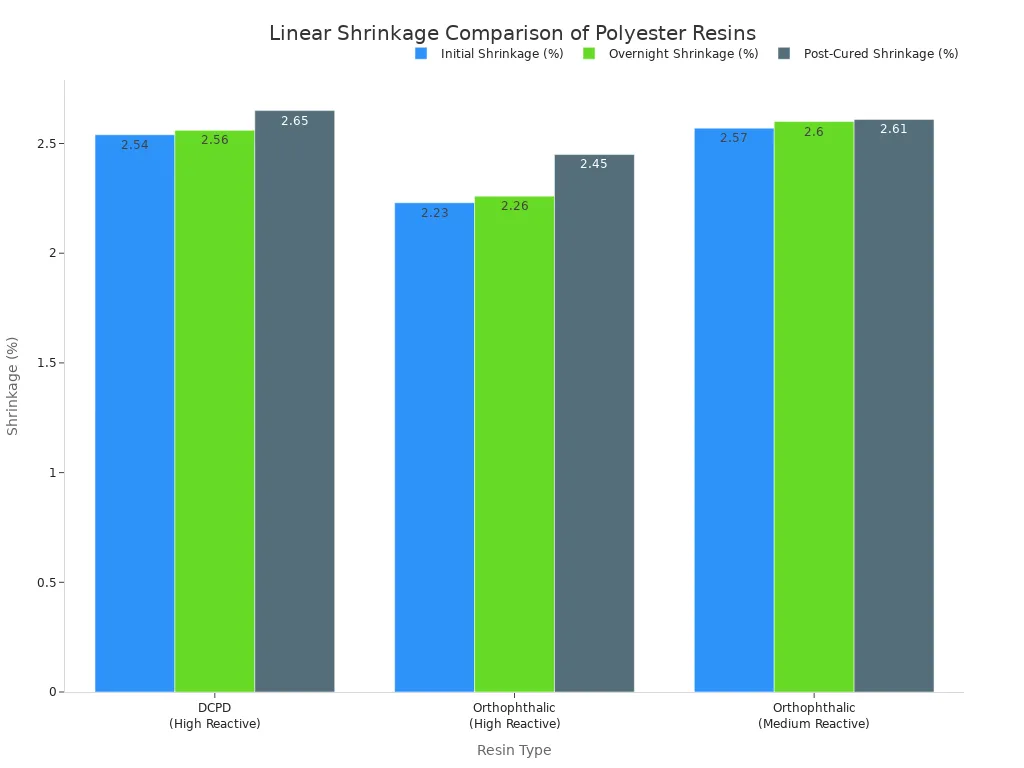
Lower shrinkage means fewer stress cracks. Your parts stay strong because the resin does not pull away from the reinforcement. This benefit matters most in thick layers and big molds. A fully unsaturated polyester resin with high shrinkage would warp and crack in those conditions.
Unsaturated Polyester Resins with Superior Dimensional Stability
Dimensional stability separates good parts from great ones. A dicyclopentadiene polyester resin keeps its shape through the whole cure cycle. The dcpd content lowers the number of reactive sites that cause shrinking. This gives you predictable results every time.
珀勒玛's DCPD modified resin formulas give you this low-shrinkage benefit. Their upr formula works well for big molds and thick sections. You get parts that keep their shape without extra finishing work. The dicyclopentadiene backbone also makes the composite tougher against impact damage.
Compare this to regular orthophthalic resins. Those materials shrink more and make more internal stress. A dcpd-modified polyester fixes that problem at the molecular level. The methyl dicyclopentadiene option gives you another way to adjust the formula for your process.
When you pick a resin for large parts, look at the shrinkage data. A dcpd resin with low shrinkage saves you time and money. You avoid rework, rejected parts, and customer complaints. That is the real value of dimensional stability.
Chemical Resistance of DCPD Polyester Resin for Harsh Environments
珀勒玛 Unsaturated Polyester Resin for Marine Durability
Saltwater breaks down weak materials over time. A dcpd polyester resin stands up to this attack. The dicyclopentadiene structure stops water molecules from getting into the polymer network. This protection prevents blistering on boat hulls and marine structures.
珀勒玛's Marine Engineering Application Solutions use this chemistry to fix real problems. Their unsaturated polyester resin stands up to humidity, saltwater, and UV radiation. You get parts that last longer and need less upkeep. The dicyclopentadiene content builds a tight crosslinked network. Water cannot easily get through this barrier.
The curing process builds a dense matrix around glass fibers. This shields the reinforcement from chemical attack. A dcpd modified unsaturated polyester resin keeps its strength after years in the ocean. Your yacht hull or dock structure stays solid without constant repairs.
Where does DCPD fit among other choices? Orthophthalic resins work for general FRP products at lower cost. Isophthalic resins give better water and chemical resistance for marine use. DCPD modified resins fall between these two. They give you strong chemical protection at a fair price. This makes them a top choice for boat builders who need good results without sky-high costs.
Industrial Applications Requiring Corrosion Protection
Chemical plants need materials that survive tough environments. A dicyclopentadiene polyester resin handles acids, bases, and solvents better than standard polyesters. The rigid molecular structure resists attack from harsh chemicals.
Storage tanks hold corrosive liquids for years. Pipes carry chemical waste through processing systems. These uses demand a upr formulation that will not break down. DCPD resins give this protection through their crosslinked network. The methyl dicyclopentadiene variant offers similar benefits with adjusted reactivity.
You save money when equipment lasts longer. Replacement costs go down. Maintenance schedules stretch out. A dcpd resin protects your investment in industrial infrastructure. The uprs used in these settings must pass strict chemical resistance tests. DCPD modified formulations meet these standards.
Lower Styrene Emissions Improve Safety with DCPD Polyester Resin
Reducing VOCs for a Healthier Workspace
Styrene vapor is a real health danger in any hand lay-up shop. The dicyclopentadiene structure in DCPD polyester resin cuts down the free styrene monomer content. This chemical design lowers volatile organic compound emissions more than standard unsaturated polyester does. You breathe easier when your workspace has less styrene in the air.
Government agencies set strict limits on styrene exposure. The table below shows the key thresholds you should know.
Limit Type | Value | Source/Context |
|---|---|---|
OSHA PEL (adopted 1971) | 100 ppm | 8-hour workday average, no respiratory protection |
OSHA-endorsed voluntary level (1996) | 50 ppm | Styrene industry voluntary program |
SIRC recommended guideline (2011) | 20 ppm | Based on industry-sponsored research |
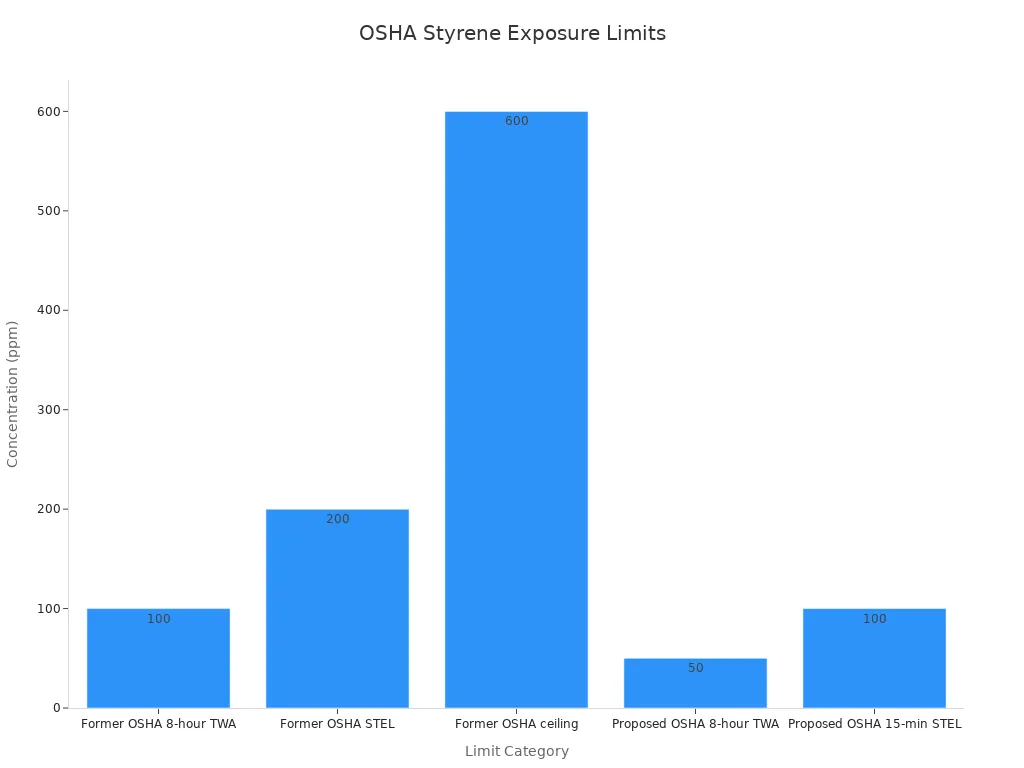
A dicyclopentadiene polyester resin helps you stay below these limits. The lower styrene content means fewer fumes come out during curing. Your team needs less respiratory protection. You also save money on ventilation equipment.
Environmental Benefits of This Unsaturated Grade
The environmental case for DCPD modified unsaturated polyester resin keeps getting stronger. This polymer grade puts fewer VOCs into the atmosphere. Your shop meets air quality regulations more easily. You avoid fines and shutdowns from environmental agencies.
Polymer's DCPD resin formulations give you this benefit without losing performance. The methyl dicyclopentadiene option offers you similar low-emission properties. Your upr selection directly affects your carbon footprint. Picking a dcpd modified resin shows your commitment to sustainable manufacturing.
The curing process also makes less odor. Workers complain less about headaches and dizziness. You attract better talent when your facility has cleaner air. This unsaturated polyester resin grade protects both people and the planet.
Faster Cure Cycles with DCPD Polyester Resin Boost Efficiency
Quick Demolding for Higher Production Throughput
DCPD has high reactivity among uprs. This chemistry starts fast during curing. Low exotherm stops heat from building up inside the part. You remove parts from the mold sooner without stress cracks or warping. Standard type gives off more heat as it cures. That heat creates internal stress in thick sections. A dicyclopentadiene modified product avoids this issue. The upr formulation balances reaction speed and temperature. Parts come out of the mold in much less time.
Vinyl ester cures slower than DCPD options. It also costs 30 to 60 percent more. For production shops, time means money. A faster cycle leads to more parts per shift. Your throughput rises without adding more workers or machines. The low shrinkage of DCPD helps with quick demolding. Parts keep their shape after release. You skip post-cure fixes. The process finishes cleanly. Your team removes parts from molds faster than with standard polyesters. Boat builders finish hulls in days instead of weeks. Automotive shops produce body panels on tight schedules. The dicyclopentadiene structure gives this speed without losing quality. This dicyclopentadiene chemistry also stops defects from thermal stress.
Selecting the Right Process Material
Pick your material based on production needs. Each product fills a different role. A study of marine composites shows how important binder chemistry is. The vinyl ester system took in less seawater than isophthalic types. Normal networks have ester links all through the polymer backbone. These can break down faster when exposed to moisture over time.
Criterion | Ortho Type | DCPD Type | Vinyl Ester |
|---|---|---|---|
Chemical Resistance | Moderate | Good | Excellent |
Mechanical Strength | Good | High rigidity | Superior |
Shrinkage | High (5-8%) | Low | Lower (4-6%) |
Water Resistance | Moderate | Superior | Excellent |
Cure Speed | Moderate | Fast | Slow |
Cost | Low | Moderate | High (30-60% more) |
DCPD works best for large moldings like truck parts and body panels. Low exotherm lowers shrinkage and internal stress. You get excellent surface finish with fast cycles. Standard ortho type fits general FRP products at lower cost. But it takes longer. Internal stress builds in thick sections. Vinyl ester handles tough chemical environments like scrubbers. But its slower cure and higher price limit its use.
For most manufacturing work, DCPD unsaturated polyester gives the best balance. Fast cure, low shrinkage, and good chemical resistance all come together. The methyl dicyclopentadiene variant offers similar benefits with adjusted reactivity for special needs. Match this to your process. Use the resin for maximum production output.
DCPD polyester resin gives you toughness from dicyclopentadiene, low shrinkage for stable parts, and strong chemical resistance. This unsaturated polyester also cuts styrene emissions and cures faster to save money. You get a superior upr for tough jobs.
Check out uses like boat hulls, chemical tanks, or automotive parts. Go to 珀勒玛's product page for Unsaturated Polyester Resin and Marine Engineering Application Solutions. Their DCPD modified formulation and methyl dicyclopentadiene options give you results you can trust. These polyesters and other uprs from 珀勒玛 meet your needs. The polymer and resin systems work in many processes.
Want to improve your composite projects? Contact 珀勒玛 for free samples and technical support.
FAQ
What makes DCPD resin different from standard polyester?
Dicyclopentadiene changes the polymer backbone. It builds a stiff ring shape that takes in impact and fights off chemicals. Regular polyesters crack when stressed. DCPD modified unsaturated polyester resin bends instead of breaking. You get better toughness and parts that last longer.
Does DCPD resin work for large molds?
Yes. This upr shrinks less than standard orthophthalic polyester as it cures. Low shrinkage means fewer stress cracks and less warping. Polymer's DCPD formulation gives you stable parts from big molds. You avoid rework and rejected pieces.
Can I use DCPD resin in marine environments?
Absolutely. The dicyclopentadiene structure stops water and salt from getting into the network. Your boat hull resists blistering and humidity. Polymer's marine solutions use this chemistry for lasting durability. You get years of service with very little upkeep.
Is DCPD resin safer to work with?
Yes. This unsaturated grade holds less free styrene monomer. Lower styrene means fewer VOC emissions in your shop. You breathe easier and meet air quality rules. The reduced odor also keeps your team more at ease during hand lay-up.
How fast does DCPD resin cure?
DCPD resin cures fast with low exotherm. You demold parts sooner without heat stress. Vinyl ester and standard polyesters take longer. For mass production, this speed lifts your throughput. You finish more parts per shift.